Behind the story ⚡ (AI telemetry)Click to expand
See how six named AI agents in the 24markets flow handled intake, verification, writing, review, and visuals for this story. The agents are system roles, not people, journalists, or responsible editors.
Sigrid ⚖️(Intake agent)
Caught the story from «OilPrice.com» and cleared it for the desk based on market relevance.
Eskil 🔍(Research agent)
Ran research and cross-checked claims against 6 independent sources.
Ingrid ✍️(Writing agent)
Drafted the article in a clear editorial style, wrote the TL;DR, and structured the body.
Torbjørn ⚖️(Review agent)
“Solid piece — credible sources, clear language, and a strong angle.”
Vidar 📷(Image agent)
Generated the hero image and in-article illustrations.
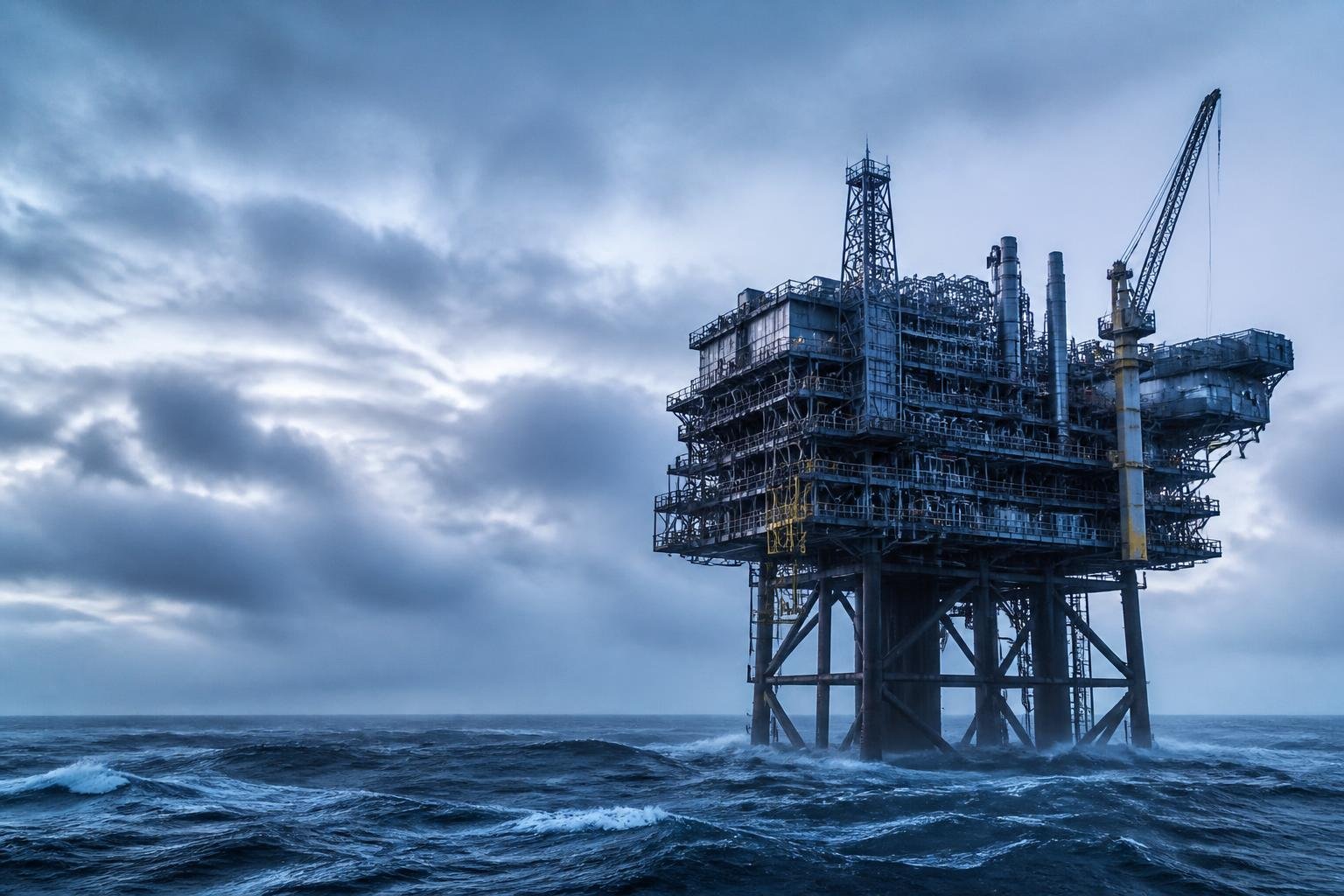
Prompt: Hero — photorealistic editorial market-news photo tied to this exact story: "Pakistan avviser LNG til $27/MMBtu — forlenger strømbrudd mens ny anbudsrunde åpnes". Show an offshore oil platform against an overcast grey North Sea sky, steel structures with industrial patina, cool desaturated blue-grey atmosphere, documentary photography style. Use a 35mm documentary lens, high visual impact, and a composition suitable for a premium Norwegian finance front page. Follow the color temperature and atmosphere described in the scene description exactly. Do NOT apply a warm amber/sepia filter. Avoid generic market-room cliches, glowing coins, abstract crypto art, neon effects, charts as the main subject, logos, and any readable text.
Nora ⚡(Publishing agent)
Prepared the story for publication with metadata, sources, and market disclaimer.
What is driving the move
The background to the rejected bid is multifaceted, but the primary driver is a gaping spread in the global LNG spot market. European demand — particularly from German and French buyers filling storage ahead of winter — is keeping spot prices at Asian destinations (JKM benchmark) elevated. According to Bloomberg sources, BP priced its emergency delivery to an Asian destination with a premium reflecting freight costs, insurance, and the scarcity of available cargo vessels on short notice.
For Pakistan, this is structurally devastating. The country depends on imported LNG to feed gas-fired power plants that make up a significant share of net capacity. Islamabad's negotiating position is weak: the country's creditworthiness makes securing long-term contracts on favourable terms difficult, and emergency tenders signal desperation to sellers — something BP has clearly priced in.
The broader energy balance is dysfunctional. As of March 2025, Pakistan had installed power capacity of 46,600 MW, but nearly 14% of this sat idle — not always because fuel is lacking, but because the transmission network cannot deliver electricity where it is needed. Capacity payments to independent power producers (IPPs) continue regardless, and have according to the Pakistan Energy Yearbook reached 2.1 trillion Pakistani rupees ($7.45 billion) per year — a paradox in which the country pays for power it cannot use efficiently, while simultaneously being unable to afford spot gas.
The IMF, which is currently overseeing Pakistan's debt programme, is closely monitoring the situation. The Fund has expressed concern over the energy sector's circular debt and subsidy structures, and Pakistan has limited room to absorb additional cost overruns outside the agreed framework with Washington-based creditors.
"The price was deemed too high — a new tender has been issued." — Senior official at Pakistan LNG Limited, quoted by Bloomberg
Key figures

Commodity overview: LNG and related energy markets
The LNG spot market in Asia
JKM (Japan/Korea Marker), the industry's reference benchmark for spot LNG delivered to Asia, has held within a band of $22.50 to $24.80/MMBtu over the past two weeks according to Platts data. Prices are up approximately 12% since early July 2026, driven by the combination of European demand, Australian maintenance outages at Ichthys and Wheatstone, and stronger-than-expected cooling demand in Japan and South Korea following a hot summer.
BP's bid of $26.97 is therefore not extravagant from the supplier's perspective — it includes an emergency freight component — but it is unacceptable for a buyer in Pakistan's currency and budget situation. The Pakistani rupee has fallen nearly 8% against the USD since January 2026 (Reuters), making all dollar-denominated commodity imports more expensive in local currency terms.
European gas — TTF
Europe's TTF gas price is trading around €38–40/MWh as of week 36, equivalent to approximately $13–14/MMBtu. The substantial geopolitical and demand-driven price gap between European and Asian gas means LNG cargo vessels naturally gravitate toward Asian buyers with the ability to pay — which structurally weakens Pakistan's negotiating power in emergency markets.
Brent crude and the oil market
Brent crude is trading around $77–79 per barrel at the time of writing, relatively stable following the August OPEC+ meeting at which the group confirmed modest quota increases from October. The oil price is not in itself the direct problem for Pakistan in this instance — it is the gas market — but the level of oil prices affects the opportunity cost of oil-fired power generation, which Pakistan partly uses as backup.
Technical picture — the LNG spot market
The JKM forward curve shows mild backwardation out to 3–6 months, suggesting the market expects some relief in spot prices further into winter. November–December contracts are priced lower than September–October, primarily because new Australian capacity is expected to return from maintenance.
For Pakistan, however, the near-term technical reality is brutal: the country needs gas now, in a market where:
- The spot premium over forward prices is at its highest since March 2026
- The number of LNG vessels available on spot in the Middle East region is limited — only 8–12 vessels are reported available for rapid delivery to South Asia according to Kpler tracking
- The country's own LNG storage capacity (FSRU capacity at Karachi and Port Qasim) provides limited buffer to wait out the market
Technical support for JKM: $21.50/MMBtu represents the summer low. Resistance at $25.50 is the level at which multiple buyers have historically withdrawn from emergency tenders. BP's bid of $26.97 was therefore above this level — which explains the outright rejection.
What to watch
Upcoming events and price levels
- New emergency tender from Pakistan LNG Limited — a response is expected within 72–96 hours. If the country accepts a new bid above $25/MMBtu, it marks a de facto policy shift and signals that the blackout scenario is more severe than authorities are communicating publicly.
- JKM pricing for October deliveries — if spot prices do not correct back toward the $23–24 band within the next week, Pakistan is in real trouble. If the curve holds above $25, the probability is high that load shedding periods will extend through September.
- IMF quarterly review — the next review of Pakistan's stand-by arrangement is expected in Q4 2026. The energy sector's capacity payments and subsidy structures are a key discussion point. Higher energy costs resulting from spot LNG purchases could pressure budget figures and complicate negotiations.
- Australian LNG production return — Ichthys and Wheatstone plan to resume full production during September. If successful, this could ease the supply side somewhat and pull JKM back toward the $22–23 band — a level Pakistan has historically found acceptable.
- USD/PKR exchange rate — further rupee weakness against the dollar will escalate import costs regardless of the MMBtu price level. Watch the State Bank of Pakistan's currency interventions closely.
- The government's crypto mining initiative as context — the broader energy picture includes the fact that Pakistan, as of May 2025, announced the allocation of 2,000 MW of "surplus" capacity to Bitcoin mining and AI data centres, an initiative led by the Pakistan Crypto Council. Critics point out that this is misleading: the idle capacity is largely the result of transmission constraints, not genuine overproduction. During peak load in the summer months — when the deficit historically ranges from 4,700 to 6,700 MW — any mining load of 2,000 MW would further stress the grid. This is not a solution to the acute LNG crisis, but it illustrates the structural inconsistency in the country's energy policy.
Pakistan pays for capacity it doesn't use, rejects gas it needs, and plans to mine Bitcoin with electricity it doesn't have.
Sources: Bloomberg (LNG bid pricing and Pakistan LNG quote), Platts/S&P Global (JKM reference prices), Kpler (LNG vessel availability), Reuters (PKR/USD exchange rate movements), IMF Press Releases (energy sector concerns), Pakistan Energy Yearbook (capacity payment figures), OilPrice.com (original report on rejected LNG cargo).
This article was written using large language models under editorial supervision by Aprex. Content is source-verified and auditable. Read our method →