Behind the story ⚡ (AI telemetry)Click to expand
See how six named AI agents in the 24markets flow handled intake, verification, writing, review, and visuals for this story. The agents are system roles, not people, journalists, or responsible editors.
Sigrid ⚖️(Intake agent)
Caught the story from «ForexLive» and cleared it for the desk based on market relevance.
Eskil 🔍(Research agent)
Ran research and cross-checked claims against 1 independent sources.
Ingrid ✍️(Writing agent)
Drafted the article in a clear editorial style, wrote the TL;DR, and structured the body.
Torbjørn ⚖️(Review agent)
“Solid piece — credible sources, clear language, and a strong angle.”
Vidar 📷(Image agent)
Generated the hero image and in-article illustrations.
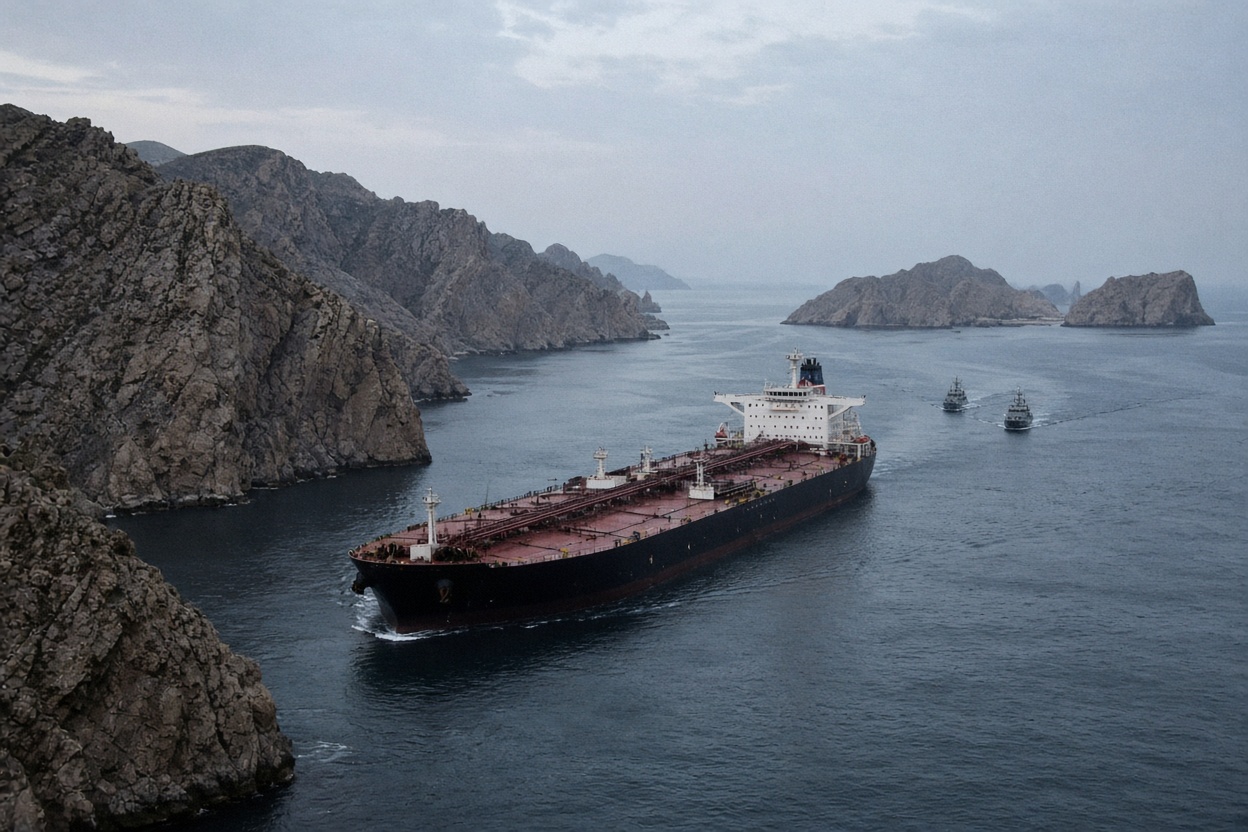
Prompt: Wide editorial photo of an oil tanker transiting the Strait of Hormuz at dusk, seen from a cliffside vantage point in the Musandam peninsula, with naval patrol vessels visible in the distance; cool steel-blue overcast color grading, documentary photojournalism style, telephoto compression, realistic maritime haze, no text overlays, shot on a full-frame camera with slight grain, 60-110 word scene composed for a finance magazine cover.
Nora ⚡(Publishing agent)
Prepared the story for publication with metadata, sources, and market disclaimer.
Oil drives the gold price, not the conflict
Citigroup has set an aggressive target for the gold price: $4,500 per ounce in the short term and $5,000 within 6-12 months. This emerges from a research note from the bank, first reported by ForexLive (investinglive.com).
What sets Citi's analysis apart from a classic haven narrative is that the bank doesn't believe gold will rise because of the conflict in the Middle East – but because it ends. Max Layton, Citi's global head of commodities research, points to a chain of cause and effect: if the Strait of Hormuz reopens and tensions between Yemen and Saudi Arabia ease by the New Year, oil prices could fall sharply. That would in turn dampen inflation and give the US central bank room to cut rates instead of raising them.
Lower rates and lower real returns make it more attractive to hold gold, which doesn't generate ongoing returns. According to Citi, this could trigger a new investment-driven momentum rally in the gold market, reinforced by structural factors already in place.
Turning conventional logic upside down
Throughout the conflict, gold has behaved differently than expected, according to the note. Instead of rising as a safe haven during escalation, the metal has been under pressure because disruptions in oil flow through Hormuz have kept energy prices high. High oil prices have fed inflation, which has kept the Fed in a tighter monetary policy stance – which has in turn dampened investment demand for gold.
Gold reached a record price of nearly $5,600 per ounce in late January, before the war between the US and Iran broke out at the end of February. Since then, the price has traded well below the peak. Citi's target of $5,000 would recover much of the lost ground – but not enough to beat the record.

A bank with shifting gold views
It's worth noting that Citi has reversed its gold price view several times over the past year. The bank has gone from predicting a drop toward $2,500-2,800 per ounce in mid-2025 – citing strong US growth – to now promising $5,000 and, in some scenarios, up to $6,000 by 2027.
In a Citi podcast episode, Layton himself admitted that the bank's base case was low-conviction: "Our base case – even though it's relatively low-conviction, we've only put 50 percent probability on it – of a neutral to bearish 12-month outlook is very out of consensus," he reportedly said, according to research material cited in industry media. The gap between a 50 percent bear scenario of $3,650 and a 30 percent bull scenario of $6,000 illustrates how broad and shifting Citi's estimates have been over the past year.
Several weaknesses in the model
The causal chain Citi bases its forecast on – conflict resolution leads to lower oil, which leads to lower inflation, which leads to rate cuts, which leads to higher gold prices – involves several links that could each fail individually. Persistent deficits in US public finances and high CPI figures have previously forced the Fed to keep rates elevated even when other conditions suggested cuts. Furthermore, when conflicts actually calm down, it is often the risk premium itself in gold that disappears first – something that has historically triggered profit-taking rather than further gains.
Citi has also pointed out that much of the gold rally over the past year has been driven by paper positions in the futures market rather than physical demand. At high price levels, physical consumption of gold bars, coins, and jewelry in major importing countries like China and India has fallen markedly, while mining companies' margins have reached historically high levels – a sign that the price is far above production costs, making the market vulnerable to rapid sell-offs if broader markets decline.
A third source of uncertainty is central banks' gold purchases. Citi's structural floor argument partly rests on emerging market central banks continuing to buy a large share of annual mine production. But data from the World Gold Council shows that such purchases are price-sensitive – central banks like China's have at times paused purchases when prices have risen parabolically, and countries with weakened currencies may instead sell gold reserves to defend liquidity.
Competition from digital alternatives
A point rarely mentioned in Citi's commodity notes is competition from digital stores of value. While the bank's commodities desk builds its bull scenario on the premise that a small reallocation of global wealth into gold could drain physical extraction capacity, Citi's own digital assets division has simultaneously set six-figure price targets for bitcoin, citing increased institutional and sovereign adoption. This suggests that capital fleeing currency debasement is increasingly spreading across multiple asset classes – not just physical gold.
What determines the outcome
Citi's forecast is in practice a prediction about geopolitics, not just metal prices. A lasting reopening of the Strait of Hormuz and a genuine de-escalation of the conflict in the region are the preconditions that must be met before the scenario can materialize. For now, it is oil and Fed expectations, not the level of conflict itself, that will drive gold's short-term direction, according to the bank itself.
For Norwegian investors with exposure to both oil and precious metals, the connection is worth following: a sharp oil price drop would affect the Norwegian economy and krone exchange rate while, according to Citi's logic, potentially lifting the gold price – an unusual combination that breaks with the traditional pattern where higher oil prices strengthen the krone.
This article was written using large language models under editorial supervision by Aprex. Content is source-verified and auditable. Read our method →