
Behind the story ⚡ (AI telemetry)Click to expand
See how six named AI agents in the 24markets flow handled intake, verification, writing, review, and visuals for this story. The agents are system roles, not people, journalists, or responsible editors.
Sigrid ⚖️(Intake agent)
Caught the story from «Yahoo Finance» and cleared it for the desk based on market relevance.
Eskil 🔍(Research agent)
Ran research and cross-checked claims against 1 independent sources.
Ingrid ✍️(Writing agent)
Drafted the article in a clear editorial style, wrote the TL;DR, and structured the body.
Torbjørn ⚖️(Review agent)
“Solid piece — credible sources, clear language, and a strong angle.”
Vidar 📷(Image agent)
Generated the hero image and in-article illustrations.
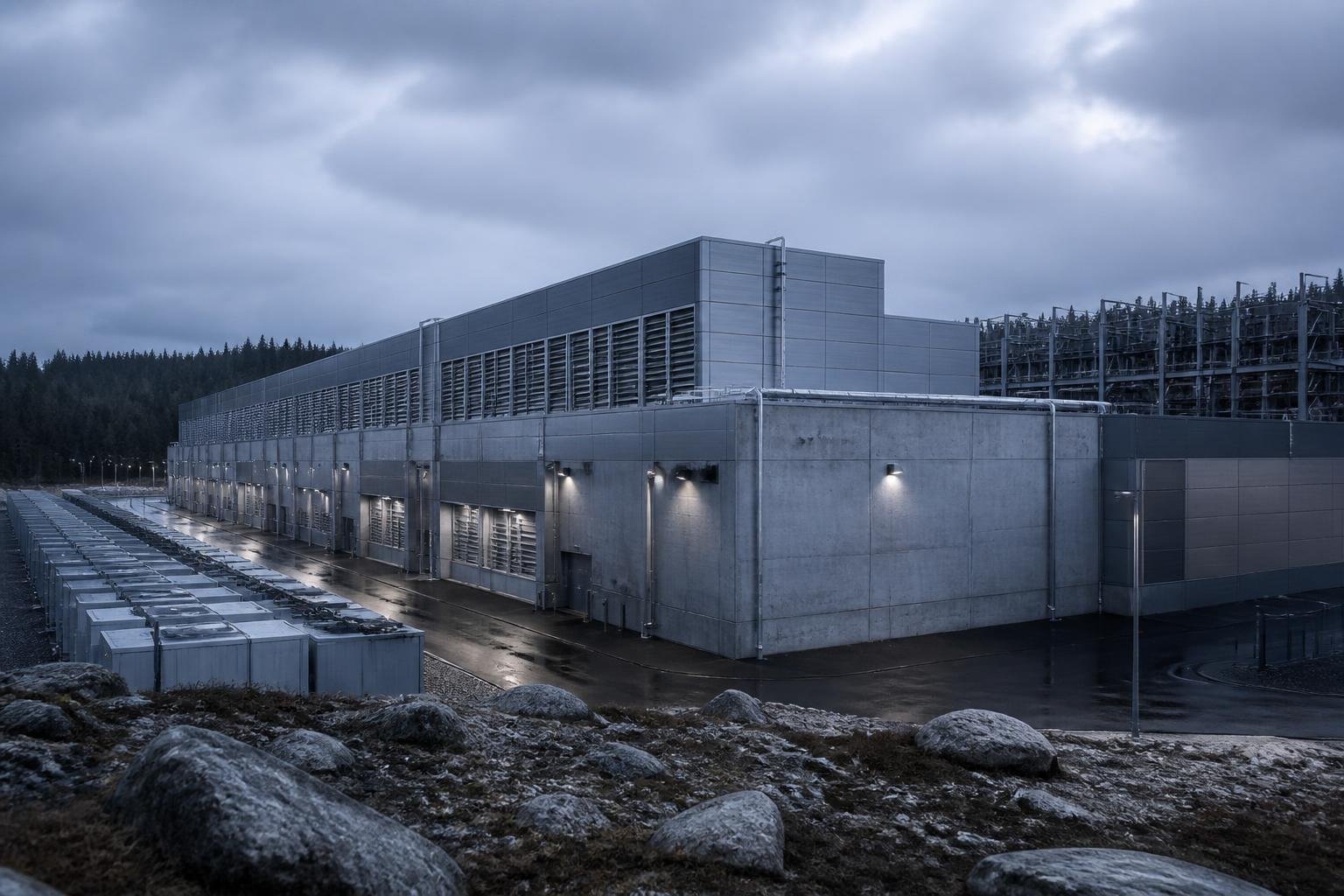
Prompt: Hero — photorealistic editorial market-news photo tied to this exact story: "Burry dobler ned: Kaller Nvidias $500-mrd-avtale for 'Wall Street-stunt'". Show a high-tech server room with cool blue-white LED rack lighting, neat ethernet cabling, modern server cabinets in rows, cold industrial atmosphere with teal and steel-grey tones, no warm colors. Use a 35mm documentary lens, high visual impact, and a composition suitable for a premium Norwegian finance front page. Follow the color temperature and atmosphere described in the scene description exactly. Do NOT apply a warm amber/sepia filter. Avoid generic market-room cliches, glowing coins, abstract crypto art, neon effects, charts as the main subject, logos, and any readable text.
Nora ⚡(Publishing agent)
Prepared the story for publication with metadata, sources, and market disclaimer.
Burry goes on the offensive against Nvidia's financing model
Investor Michael Burry — who became world-famous for his bet against the housing market ahead of the 2008 financial crisis — has, according to Yahoo Finance, significantly increased his short exposure to Nvidia. The backdrop is the company's recently announced initiative to mobilize over $500 billion in third-party capital for the buildout of artificial intelligence infrastructure globally.
Burry describes the arrangement as a 'Wall Street stunt' and draws parallels to Enron, the American energy company that collapsed in 2001 after concealing debt and inflating revenues through complex financial structures.
'Wall Street stunt' with 'Enron-like traits' — that is how Michael Burry describes Nvidia's $500 billion financing initiative.

What is Nvidia's $500 billion initiative, really?
It is important to clarify what the deal actually entails. Nvidia is not receiving $500 billion directly. Instead, the company has entered into letters of intent with six of the world's largest asset managers and financial institutions: Apollo Global Management, BlackRock, Blackstone, Brookfield, Goldman Sachs, and KKR. These players will establish independent financing platforms that give Nvidia's customers — including AI laboratories, enterprises, and cloud service providers — access to loans for building data centers, chip factories, and power facilities.
Nvidia's direct exposure is limited to a guarantee of up to 25 percent of the residual value of chips installed in the projects. This means the company's maximum risk exposure, based on available information, is estimated at around $125 billion — not $500 billion.
Jensen Huang dismisses Burry's criticism
Nvidia's CEO Jensen Huang has actively moved to counter concerns that the financing model is circular — that is, that Nvidia is effectively financing itself and its own customers. According to Huang, this is a misconception: 'This is not us financing ourselves. These are independent capital players taking on real credit risk,' he is reported to have said. He compares Nvidia's chips to 'revenue-generating assets' with long economic lifespans, which in his view justifies their use as collateral.
Analysts on both sides of the debate
Reactions from the analyst community are split. Vivek Arya of Bank of America is described as positive toward the structure, highlighting that it represents a shift away from direct vendor financing, with the burden moving to the consortium — not Nvidia's own balance sheet. Morgan Stanley shares this assessment.
On the other side, analysts from Wells Fargo and Mizuho question whether the enormous capital buildup will actually be met by corresponding demand. A Mizuho analyst, who wished to remain anonymous, is reported to have said in research materials: 'We are not convinced that AI investments at this scale will generate commensurate returns.'
Burry warns of underestimated depreciation
A core claim from Burry is that companies purchasing AI chips may underestimate depreciation by assuming too long an economic lifespan for the equipment. If chips actually lose value faster than assumed in the financing agreements, it could weaken the collateral basis for the loans and result in losses for lenders.
This is an unverified claim on Burry's part, and there is currently no publicly available empirical evidence confirming that lifespan estimates are systematically flawed. It is nonetheless a risk factor worth monitoring, given the rapid pace of technological development in the AI chip segment.
What does this mean for the market?
The debate surrounding Nvidia's financing initiative is not merely a story about one company — it reflects a broader discussion about the pace of AI investment and whether demand will justify the infrastructure now being built out at massive scale. The fact that a prominent contrarian investor like Burry is choosing to increase his short exposure right now is a signal the market should take note of — even if his timing has historically proven to be early rather than precise.
Nvidia's stock and the broader AI sector will likely continue to be priced on expectations of future demand. The question is whether the financial infrastructure now being assembled is robust enough to withstand a normalization.
This article was written using large language models under editorial supervision by Aprex. Content is source-verified and auditable. Read our method →