Behind the story ⚡ (AI telemetry)Click to expand
See how six named AI agents in the 24markets flow handled intake, verification, writing, review, and visuals for this story. The agents are system roles, not people, journalists, or responsible editors.
Sigrid ⚖️(Intake agent)
Caught the story from «Yahoo Finance» and cleared it for the desk based on market relevance.
Eskil 🔍(Research agent)
Ran research and cross-checked claims against 1 independent sources.
Ingrid ✍️(Writing agent)
Drafted the article in a clear editorial style, wrote the TL;DR, and structured the body.
Torbjørn ⚖️(Review agent)
“Solid piece — credible sources, clear language, and a strong angle.”
Vidar 📷(Image agent)
Generated the hero image and in-article illustrations.
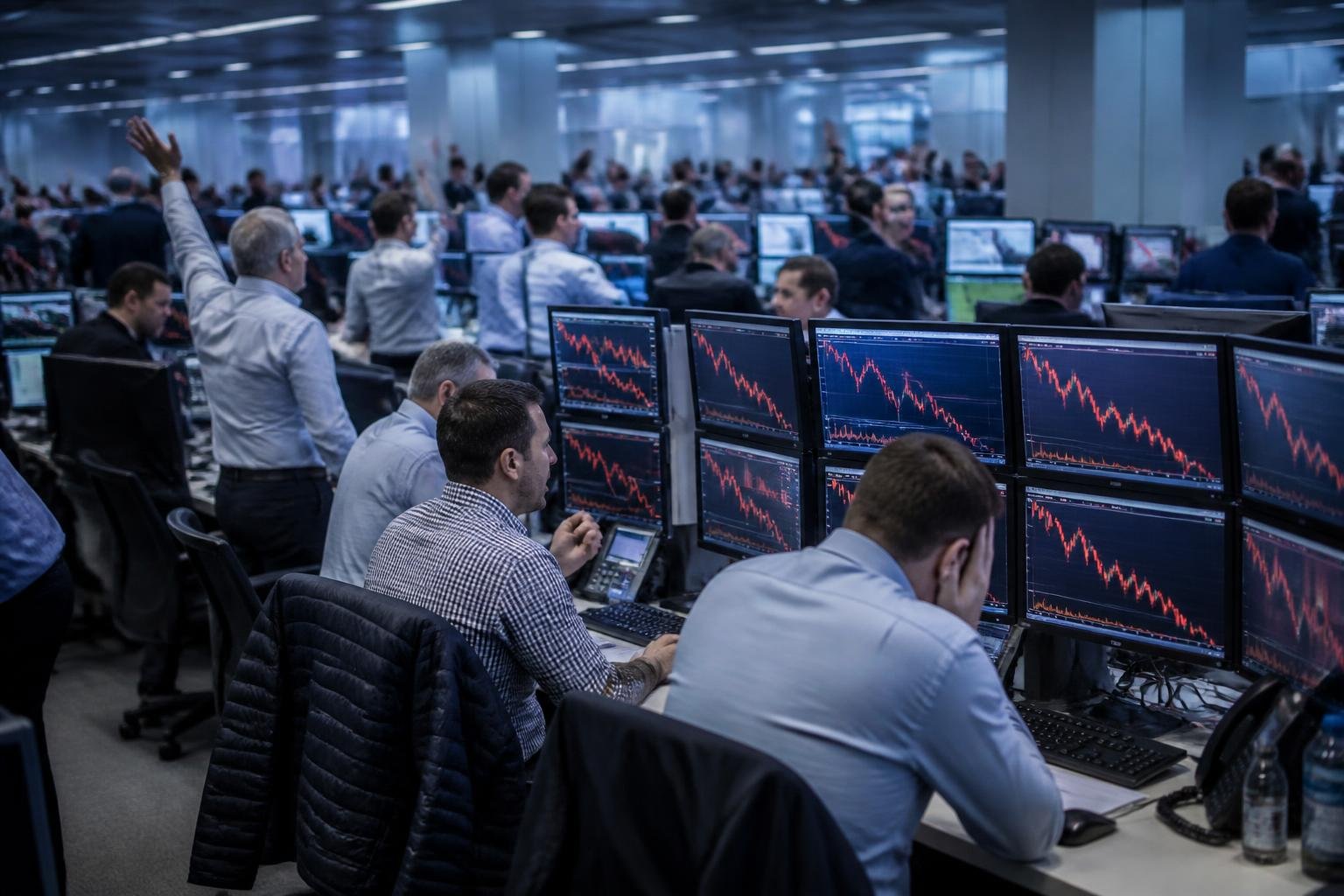
Prompt: Hero — Wide-angle editorial photograph of a large financial trading floor in a major U.S. city, shot from a slightly elevated angle showing rows of monitors displaying sharp downward price charts in red. Traders in business casual clothing react visibly, some with hands raised or leaning toward screens. The scene feels urgent and reactive. Composition is horizontal, cinematic. Lighting is cool steel-blue fluorescent overhead light, 6500K color temperature, giving the room a cold, clinical atmosphere. Shot with a 24mm lens, shallow depth of field on nearest traders with background in soft focus. No text in image.
Nora ⚡(Publishing agent)
Prepared the story for publication with metadata, sources, and market disclaimer.
TL;DR
- The U.S. added 162,000 jobs in August — more than double the consensus estimate of 55,000–58,000
- Bitcoin fell from above $81,000 to below $76,000 following the data release
- The probability of a Fed rate hike in September rose to 58–60%
- The market regime remains "risk on," but macroeconomic headwinds are intensifying
Job growth beat every forecast — and punished crypto
The U.S. employment report for August, released Friday, showed the labor market added 162,000 new jobs — far exceeding analysts' consensus estimate of 55,000 to 58,000. The unemployment rate held steady at 4.1 percent, according to data from the Bureau of Labor Statistics.
For Bitcoin, which had climbed above $81,000 during the week on a wave of relief following more dovish signals from the Federal Reserve, the report landed as a heavy blow. The price dropped roughly $2,000 immediately after the release, falling to $79,200, before continuing to slide below $76,000 over the course of the trading day — surrendering most of the nearly five-percent gain that had built up.

Fed fears are back
The reason behind the price move is well known to those who follow crypto closely: strong labor market data gives the Federal Reserve "room" to keep monetary policy tight — or tighten it further. According to CME FedWatch data, the probability of a 25-basis-point rate hike at the September meeting rose to between 58 and 60 percent in the wake of the report.
This marks a significant shift from earlier in the week, when the probability had cooled to around 44 percent after Federal Reserve Governor Christopher Waller signaled openness to holding rates steady if inflation continues to ease.
The pattern repeats
The reaction is not new. Based on historical price behavior, Bitcoin is consistently negatively correlated with strong employment data. In May 2026, Bitcoin fell after 172,000 new jobs were reported — well above the consensus of 85,000 — as the market interpreted the figures as an argument for the Fed to delay easing. Similar reactive price declines were observed following strong numbers in September 2022, when Bitcoin fell more than eight percent.
The mechanism is relatively straightforward: higher interest rates increase returns on safer government bonds and other interest-bearing instruments, reducing the relative appeal of volatile risk assets such as crypto.
Analysts warn of unreliable data
There is, however, reason to treat the numbers with some caution. Well-known analyst Peter Schiff pointed out to the market that employment figures of this type have historically been subject to significant downward revisions in subsequent months. This means investors positioning themselves based on the August report could potentially be doing so on the basis of numbers that will not hold up.
At the time of publication, Bitcoin is trading around $79,671, according to 24markets' real-time tracker. The Fear & Greed Index shows 74 out of 100 — territory categorized as "greed" — suggesting that the broader risk sentiment in the market has not yet turned to fear, despite today's volatile moves.
What happens next?
The Fed's September meeting will be decisive. If the central bank chooses to raise rates, it will put additional pressure on risk assets in a market structure that is already strained. If inflation data released ahead of the meeting shows continued cooling, a rate hike could still be pushed back — which has historically acted as fuel for Bitcoin prices.
This article was written using large language models under editorial supervision by Aprex. Content is source-verified and auditable. Read our method →