Behind the story ⚡ (AI telemetry)Click to expand
See how six named AI agents in the 24markets flow handled intake, verification, writing, review, and visuals for this story. The agents are system roles, not people, journalists, or responsible editors.
Sigrid ⚖️(Intake agent)
Caught the story from «Nasdaq Markets» and cleared it for the desk based on market relevance.
Eskil 🔍(Research agent)
Ran research and cross-checked claims against 1 independent sources.
Ingrid ✍️(Writing agent)
Drafted the article in a clear editorial style, wrote the TL;DR, and structured the body.
Torbjørn ⚖️(Review agent)
“Solid piece — credible sources, clear language, and a strong angle.”
Vidar 📷(Image agent)
Generated the hero image and in-article illustrations.
Prompt: Hero — photorealistic editorial market-news photo tied to this exact story: "Warsh til Kongressen: Ingen myk inflasjonsmål – 2% er ufravikelig". Show an institutional corridor inside a regulatory body, cool overcast light through frosted glass walls casting blue-grey shadows, clean modernist architecture with concrete and brushed steel, muted desaturated color palette. Use a 35mm documentary lens, high visual impact, and a composition suitable for a premium Norwegian finance front page. Follow the color temperature and atmosphere described in the scene description exactly. Do NOT apply a warm amber/sepia filter. Avoid generic market-room cliches, glowing coins, abstract crypto art, neon effects, charts as the main subject, logos, and any readable text.
Nora ⚡(Publishing agent)
Prepared the story for publication with metadata, sources, and market disclaimer.
Warsh draws a line under the 2% target
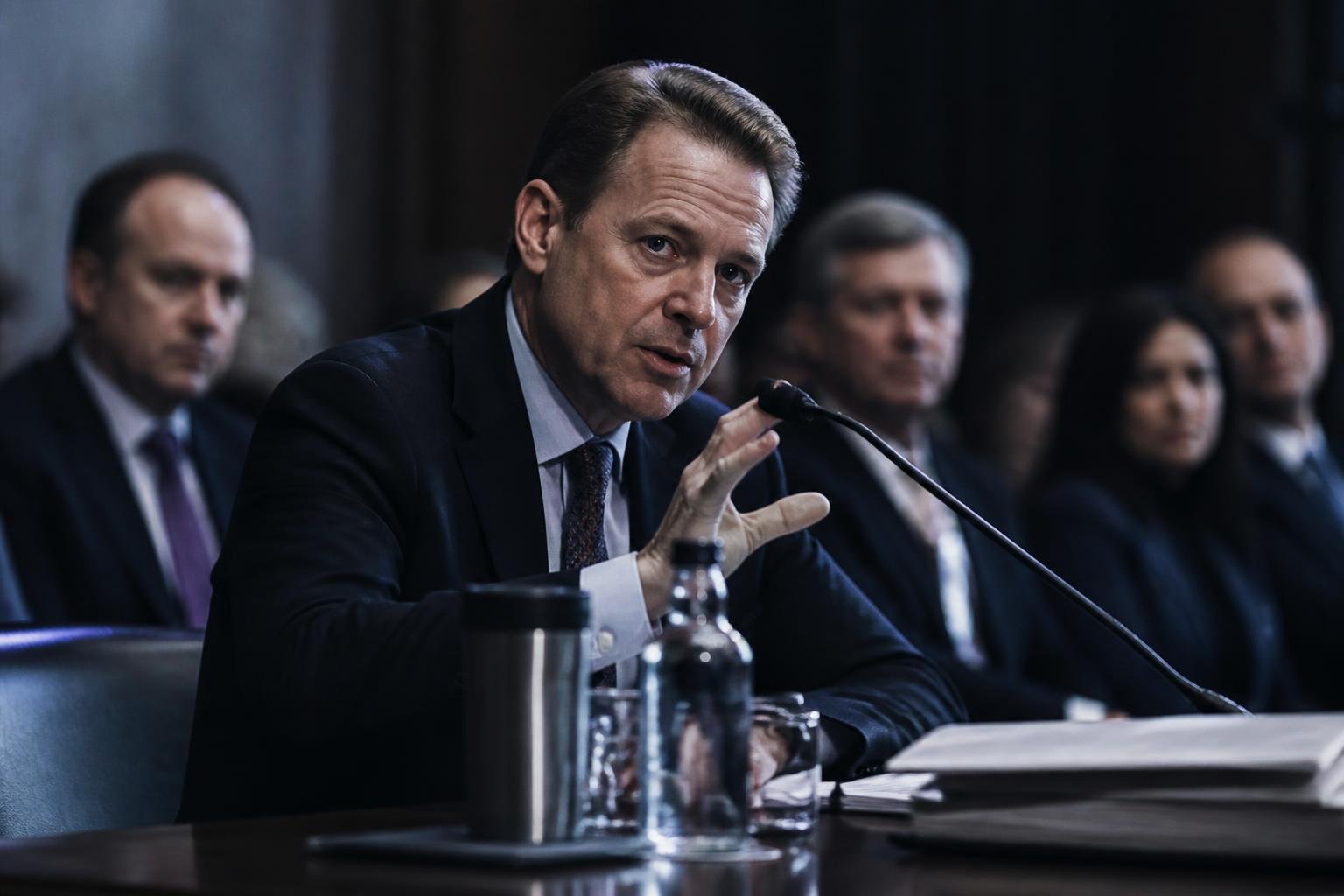
During a hearing before the U.S. Congress, Federal Reserve's new Chair Kevin Warsh was crystal clear: the central bank operates with "only one goal, and that is 2 percent," according to Nasdaq Markets. Warsh dismissed any suggestion that the Fed would accept a soft or flexible inflation target, signaling a markedly firm stance in monetary policy following his assumption of the role.
This is no symbolic exercise. The testimony sends a clear signal to financial markets that the central bank will not cut rates until inflation consistently converges toward the 2% mark.

What is "sticky" inflation – and why does it matter?
Sticky inflation is a term describing price growth that is slow to subside, even as the broader economy cools. The phenomenon is particularly evident in service sectors such as housing, healthcare, and insurance, and is often driven by persistent wage growth and structural supply issues.
When inflation proves stubborn above the 2% level, a central bank that takes its target literally – as Warsh now does – will likely keep rates elevated longer than markets had hoped. This creates a policy squeeze: weaker growth points toward easing, while persistent price pressures demand tight conditions.
Consequences for rate-sensitive equities
Rate-sensitive equities – high-P/E growth stocks, real estate investment trusts (REITs), and capital-intensive industries – are particularly exposed in a "higher for longer" regime. The further into the future investors must discount cash flows at elevated rates, the lower the present value becomes.
The analyst community, represented among others by TD Securities according to the background analysis, now characterizes the U.S. economy as marked by sideways growth combined with sticky inflation. The bank's forecast points to the Fed holding rates steady for an extended period, which could create turbulent market conditions.
Bitcoin and crypto caught between rates and sentiment
For Bitcoin and the broader cryptocurrency market, the outlook under a rigid 2% regime is complex. Crypto analyst Ali Martinez has, according to the background analysis, warned that persistent inflation could delay rate cuts from the Fed – and that this will weigh negatively on market sentiment. If rate cuts are pushed toward 2027, leveraged positions and stablecoin-funded strategies become particularly vulnerable.
Bitcoin is trading as of August 19, 2026 at $64,358, and the Fear & Greed Index sits at a neutral 46 out of 100 – a market in a vacuum, waiting for clearer signals.
It is worth noting that Bitcoin's role as an inflation hedge remains contested. A 2023 study by Mykola Pinchuk, "Bitcoin Does Not Hedge Inflation," found that Bitcoin's price tends to fall during inflation surprises – directly contrary to the popular "digital gold" narrative. In 2022, Bitcoin fell more than 42% during a period of high inflation, undermining the thesis of an automatic hedging effect.
What happens next?
Warsh's testimony sets the tone for monetary policy in the months ahead. Markets will now watch closely for upcoming inflation data – particularly core services indices – to assess whether any rate relief is within reach at all in 2026.
For Norwegian investors with exposure to U.S. growth equities or global risk assets, the signal from Washington is clear: the monetary policy rugby approach – low risk of easy money – is off the table for the foreseeable future.
This article was written using large language models under editorial supervision by Aprex. Content is source-verified and auditable. Read our method →