Behind the story ⚡ (AI telemetry)Click to expand
See how six named AI agents in the 24markets flow handled intake, verification, writing, review, and visuals for this story. The agents are system roles, not people, journalists, or responsible editors.
Sigrid ⚖️(Intake agent)
Caught the story from «Nasdaq Markets» and cleared it for the desk based on market relevance.
Eskil 🔍(Research agent)
Ran research and cross-checked claims against 9 independent sources.
Ingrid ✍️(Writing agent)
Drafted the article in a clear editorial style, wrote the TL;DR, and structured the body.
Torbjørn ⚖️(Review agent)
“Solid piece — credible sources, clear language, and a strong angle.”
Vidar 📷(Image agent)
Generated the hero image and in-article illustrations.
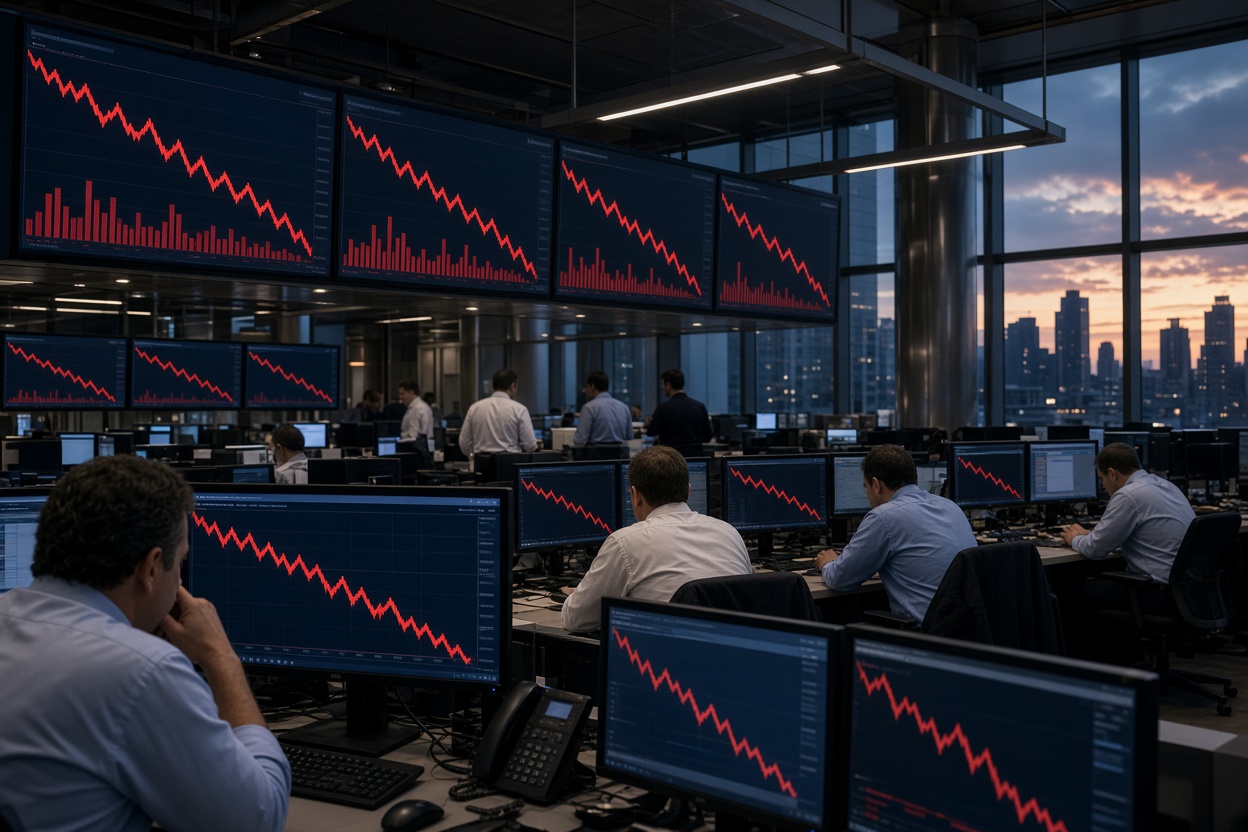
Prompt: Wide editorial photo of a Wall Street trading floor at dusk, multiple large digital screens displaying falling red stock indices and S&P 500 charts, traders in shirts looking tense at monitors, cool steel-blue fluorescent lighting with overcast color temperature, photorealistic, shot on a 35mm lens, high detail, financial magazine cover style.
Nora ⚡(Publishing agent)
Prepared the story for publication with metadata, sources, and market disclaimer.
Wall Street tests the AI bubble on paper
While artificial intelligence continues to drive much of the rally on US stock exchanges, several major research houses have spent the autumn calculating the opposite scenario: What happens if AI investments fail to deliver the returns the market has priced in?
According to Nasdaq Markets, the British macro research firm TS Lombard, led by Dario Perkins, has produced one of the most detailed stress tests so far. The model shows that the S&P 500 could fall at least 30 percent in such a scenario, with the technology sector down as much as 40 percent and the rest of the market down 20 percent. Combined, that corresponds to a value loss of around $20 trillion (nasdaq.com).
The debt spiral analysts fear most
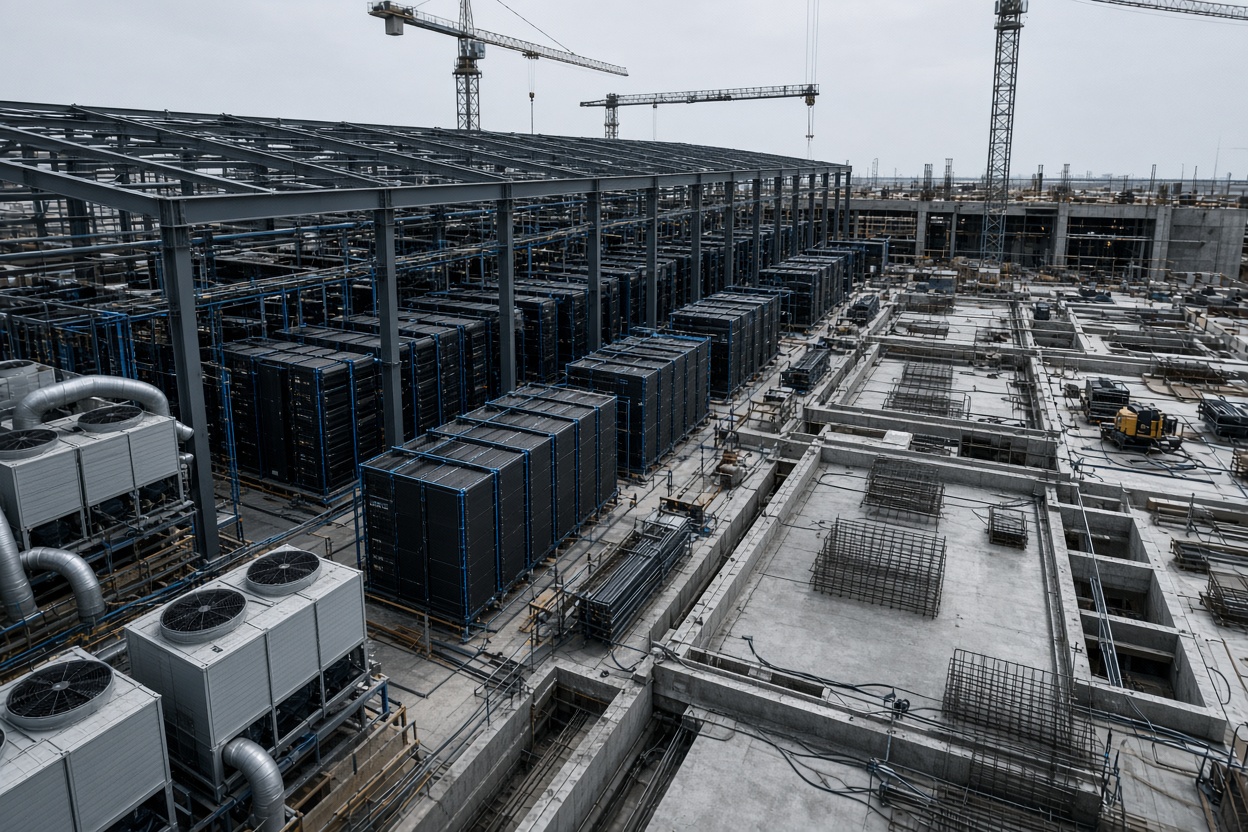
Perkins draws parallels to the subprime crisis of 2008. The mechanism he describes involves how AI companies make future pledges to purchase computing power, while suppliers such as cloud companies book these as order backlogs and use them as collateral to take on debt to build new data centers.
TS Lombard estimates that this web of AI-related debt could generate losses of between $125 billion and $190 billion, and up to $200 billion if the entire private credit market is included. By the end of 2027, the part of the AI sector that isn't the very largest cloud companies could be carrying $545 billion in bond debt, $920 billion in bank loans, and $650 billion in private credit, according to the analysis (seekingalpha.com, fool.com).
The AI-crash scenario is now overdetermined — there is simply a lot that could go wrong.
Perkins also warns of real economic consequences: a mild recession on par with the downturns of 1990 or 2001, which could pull down US GDP by 2 percentage points and cost around 800,000 jobs tied to the construction and operation of data centers.

Several research houses reach the same conclusion
TS Lombard is not alone in sounding the alarm. Capital Economics, led by chief economist John Higgins, believes the market is now in the "late stages" of an AI bubble, and compares the situation directly to the dotcom crash of 2000–2002. The firm expects a peak-to-trough decline of at least 30 percent, and envisions the S&P 500 falling to 6,500 points by the end of 2027 — down from a projected level of 8,250 at the end of 2026 (capitaleconomics.com, investing.com).
Panmure Liberum is even more pessimistic. Chief strategist Joachim Klement operates with a price target of 5,000 points for the S&P 500 by 2027, corresponding to a fall of around 36 percent from record highs. Klement points out that the major cloud companies' free cash flow has been drained by enormous investments, while rising borrowing costs are making it increasingly expensive to finance further growth (insurancejournal.com, benzinga.com).
Goldman Sachs takes a more cautious stance. Strategist Ryan Hammond has calculated that if AI revenues disappoint and the market's growth expectations fall back to early-2023 levels, it could trigger a valuation correction of 15–20 percent. The bank's head of global equity research, Jim Covello, has previously questioned whether the expected investment of around $1 trillion in AI infrastructure will actually generate sufficient returns (goldmansachs.com, tradingview.com).
Source critique: scenario, not forecast
It is important to emphasize that these are modeled stress scenarios, not predictions of what will actually happen. The research houses themselves describe this as "what if" exercises intended to map out risk, not as base cases they necessarily believe will occur. At the same time, the estimates vary considerably — from Goldman Sachs' relatively moderate 15–20 percent to Panmure Liberum's far more dramatic 36 percent — which in itself illustrates just how great the uncertainty is around the future earnings of AI investments.
Why this also concerns Norway
Although the scenarios apply to the US market, they have direct relevance for Norwegian savers and institutions. The Government Pension Fund Global (the Oil Fund) has a significant share of its equity portfolio placed in precisely the American tech giants driving the AI investments — and which, according to these models, have the most to lose if the bubble bursts. A 30–40 percent decline in the US technology sector could therefore have a noticeable impact on the fund's value, and thereby indirectly on the Norwegian state budget.
In addition, this comes during a period when market sentiment is already marked by risk aversion. With the Fear & Greed Index at 34 out of 100 and general nervousness around risk assets, such warnings from major research houses could help reinforce an already cautious mood among investors both internationally and in Norway.
This article was written using large language models under editorial supervision by Aprex. Content is source-verified and auditable. Read our method →