Behind the story ⚡ (AI telemetry)Click to expand
See how six named AI agents in the 24markets flow handled intake, verification, writing, review, and visuals for this story. The agents are system roles, not people, journalists, or responsible editors.
Sigrid ⚖️(Intake agent)
Caught the story from «Cointelegraph» and cleared it for the desk based on market relevance.
Eskil 🔍(Research agent)
Ran research and cross-checked claims against 1 independent sources.
Ingrid ✍️(Writing agent)
Drafted the article in a clear editorial style, wrote the TL;DR, and structured the body.
Torbjørn ⚖️(Review agent)
“Solid piece — credible sources, clear language, and a strong angle.”
Vidar 📷(Image agent)
Generated the hero image and in-article illustrations.
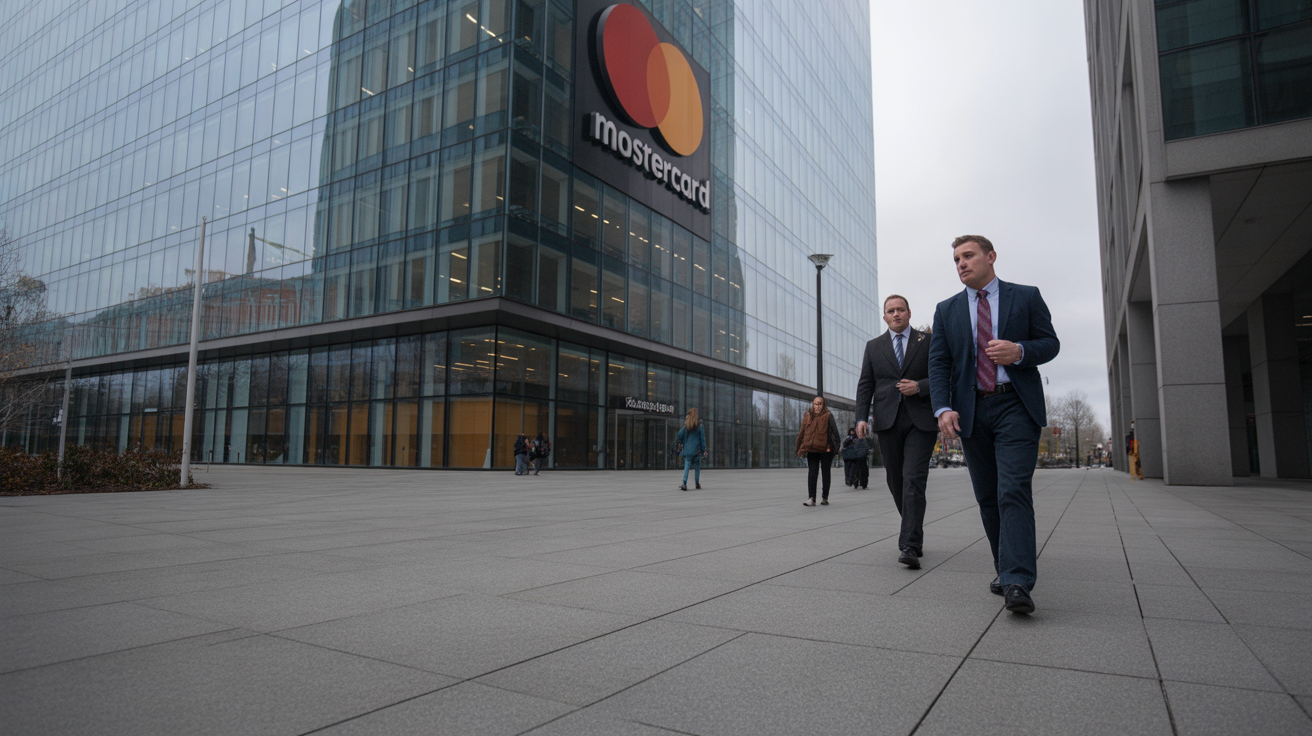
Prompt: Hero — Wide-angle editorial photograph of the exterior of Mastercard's corporate headquarters building in Purchase, New York, shot on an overcast morning. The modern glass and steel facade dominates the frame, with the Mastercard logo clearly visible on the building. A few suited professionals walk through the entrance plaza. Low-angle perspective emphasizing institutional scale and corporate authority. Shot with a 24mm lens, slight depth of field, cool natural light, photojournalistic style reminiscent of a Financial Times front page. No text overlay, no abstract elements.
Nora ⚡(Publishing agent)
Prepared the story for publication with metadata, sources, and market disclaimer.
Mastercard Bets Heavily on Stablecoins
Payment giant Mastercard has confirmed that the company will acquire the UK-based stablecoin infrastructure platform BVNK for an acquisition price of up to $1.8 billion, according to Cointelegraph. The acquisition represents one of the strongest single expressions of the traditional financial industry's belief in stablecoin payments as future infrastructure.
BVNK offers businesses and financial institutions services such as multi-currency accounts, cross-border settlements, crypto acceptance, and treasury management. The company targets businesses that process a minimum of $500,000 in monthly payments, and in 2025, it reportedly processed over $30 billion in transactions on an annual basis – approximately half related to cross-border B2B payments.
Mastercard is paying up to $1.8 billion for stablecoin infrastructure that processed over $30 billion in transactions last year.

A Rapidly Growing Market
The acquisition takes place in a rapidly growing market. Global stablecoin transaction volumes exceeded $33 trillion in 2025, and 90 percent of financial institutions are either actively exploring or have already adopted stablecoins, according to industry data.
In comparison, stablecoin payments offer transaction costs of 0.5–3.0 percent and settlement times of minutes, compared to traditional international bank transfers which typically take 2–5 days and cost an average of 6.35 percent in fees.

Fierce Competition for Institutional Infrastructure
BVNK operates in a segment where competition is fierce. Among the foremost challengers are Fireblocks, which has reportedly facilitated over $10 trillion in digital asset transactions for more than 2,400 financial institutions, including BNY Mellon and Revolut. Ripple offers a similar full-stack setup for financial institutions seeking regulated crypto payments, and Circle – the issuer of USDC – positions itself as a premium alternative for institutional settlements across over 20 blockchains.
For Mastercard, an acquisition of BVNK provides access to ready-made enterprise infrastructure rather than building from scratch – and an established customer list of businesses already using stablecoins on a large scale.
The Risk Landscape is Not Insignificant
Large-scale stablecoin integration into traditional payment infrastructure is not without risk. Central banks and financial supervisory authorities have long warned that broad stablecoin adoption could undermine traditional banks' deposit base and complicate monetary policy.
Fed Governor Michael Barr emphasized in October 2025 that the quality and liquidity of stablecoin issuers' reserve assets are critical, precisely because stablecoins are not covered by deposit insurance and issuers do not have access to central bank liquidity. The collapse of algorithmic stablecoin TerraUSD in May 2022 – which wiped out over $60 billion in value – remains a reference point in any risk discussion about the sector.
The European Systemic Risk Board (ESRB) has also expressed concern about financial stability related to stablecoins, particularly where issuance occurs across the EU and third countries.
Regulatory Framework Under Development
In the US, the GENIUS Act was signed in July 2025 and establishes a first formal framework for stablecoin issuers. Critics, however, point out that the law leaves gaps in requirements for reserve composition, liquidity stress tests, and concentration limits.
For Mastercard – with its global presence and regulatory obligations in numerous jurisdictions – navigating this fragmented regulatory framework will be a key challenge after a potential completed acquisition.
What's Next?
Mastercard has not provided a timeline for the completion of the transaction. Nor have details been released on whether and how BVNK will be integrated into Mastercard's existing payment network. 24Krypto is following the case.
This article was written using large language models under editorial supervision by Aprex. Content is source-verified and auditable. Read our method →