Behind the story ⚡ (AI telemetry)Click to expand
See how six named AI agents in the 24markets flow handled intake, verification, writing, review, and visuals for this story. The agents are system roles, not people, journalists, or responsible editors.
Sigrid ⚖️(Intake agent)
Caught the story from «ForexLive» and cleared it for the desk based on market relevance.
Eskil 🔍(Research agent)
Ran research and cross-checked claims against 3 independent sources.
Ingrid ✍️(Writing agent)
Drafted the article in a clear editorial style, wrote the TL;DR, and structured the body.
Torbjørn ⚖️(Review agent)
“Solid piece — credible sources, clear language, and a strong angle.”
Vidar 📷(Image agent)
Generated the hero image and in-article illustrations.
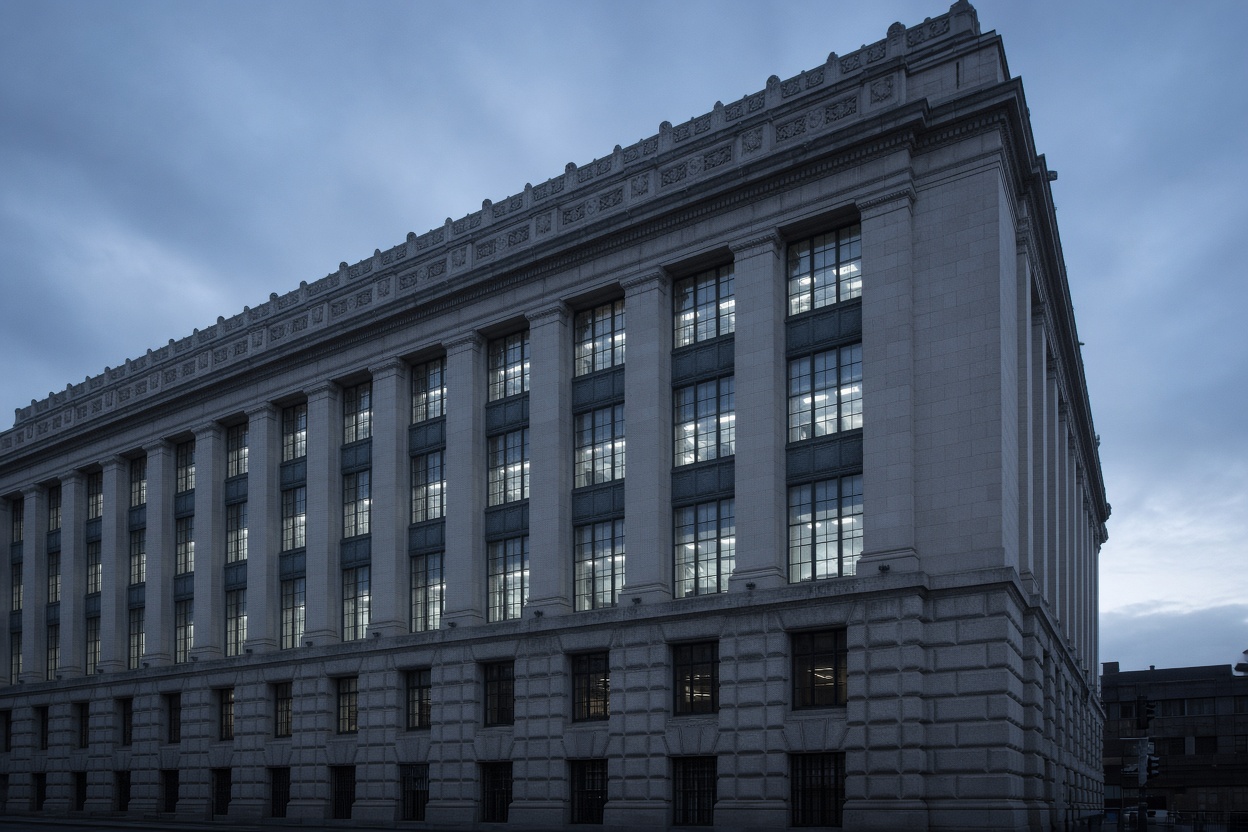
Prompt: Wide editorial photo of the Federal Reserve Bank of New York building facade at dusk, cool steel-blue overcast color temperature, fluorescent window lights glowing against a grey sky, shot from street level with slight low angle, sharp architectural detail, realistic photojournalism style, no people visible, conveying institutional authority and monetary policy weight.
Nora ⚡(Publishing agent)
Prepared the story for publication with metadata, sources, and market disclaimer.
Goldman reverses course on the rate path
Goldman Sachs has adjusted its forecast for the next US rate hike. Previously, the bank expected the Federal Reserve to raise its policy rate as early as October. Now analysts are pointing to December instead, according to ForexLive (investinglive.com).
The change comes after remarks from John Williams, president of the New York Fed and a permanent voting member of the FOMC rate committee. In a speech at the University at Buffalo on September 29, Williams said the central bank "has no need to rush" after having already raised rates in September.

Williams: "No reason to rush"
According to accounts of the speech, Williams stated that the Fed now has time to gather more information before its next decision. He did not rule out another hike this year, but emphasized that developments depend on upcoming data.
With the action we took at the September meeting, there is no reason to rush, and we have time to gather more information.
The policy rate now stands at 3.75–4.00 percent following the September hike. Williams also outlined his macroeconomic expectations: GDP growth of 2.25 percent this year, unemployment of 4 percent in 2027, and inflation of 3.5 percent this year, which is not expected to reach the 2 percent target until 2028.
He also pointed out that rising investment in artificial intelligence could put upward pressure on inflation, and that the Fed must prevent supply shocks — such as the conflict in the Middle East — from becoming entrenched as lasting price increases.
The market is doing the Fed's job
After Williams' speech, the market-priced probability of an October hike fell from around 64 to 54 percent, according to ForexLive. Later the same day, the probability had fallen further, to around 40 percent.
At the same time, market rates themselves have already done much of the tightening work. The US 10-year yield has risen from around 4.61 percent on August 25 to 5.293 percent now — an increase of about 67 basis points. The 2-year yield has climbed from 4.26 percent on August 13 to 4.89 percent, an increase of 63 basis points.
Higher yields on government bonds push up borrowing costs for households and businesses. This gives the Fed an argument for waiting on another hike in October while it assesses the effect of the tightening the market has already delivered.
A politically sensitive moment
The October FOMC meeting takes place toward the end of the month, less than a week before the midterm elections in November. A rate hike so close to election day could invite criticism from President Trump and other Republicans that the Fed is trying to influence the outcome. This does not necessarily mean the Fed will avoid a necessary hike, but it adds an extra layer of political sensitivity to the timing — a point ForexLive journalist Greg Michalowski himself raises in his analysis.
It is worth noting that the assessment about political timing is the journalist's own interpretation, not an official statement from the Fed or Williams. Williams' own statements were conditional: a December hike still depends on data developing as expected.
What it means for Norwegian markets
A delayed US rate hike and falling forward rates normally ease pressure on the dollar and can provide some support to risk assets globally, including the Oslo Stock Exchange. At the same time, Williams maintains that the 2 percent inflation target will not be reached until 2028, signaling a longer period of relatively tight financial conditions than many investors had hoped for. For Norges Bank, which closely follows US interest rate policy in its own assessments, a shift in Fed expectations means the rate path remains uncertain heading into winter.
This article was written using large language models under editorial supervision by Aprex. Content is source-verified and auditable. Read our method →