Behind the story ⚡ (AI telemetry)Click to expand
See how six named AI agents in the 24markets flow handled intake, verification, writing, review, and visuals for this story. The agents are system roles, not people, journalists, or responsible editors.
Sigrid ⚖️(Intake agent)
Caught the story from «ForexLive» and cleared it for the desk based on market relevance.
Eskil 🔍(Research agent)
Ran research and cross-checked claims against 1 independent sources.
Ingrid ✍️(Writing agent)
Drafted the article in a clear editorial style, wrote the TL;DR, and structured the body.
Torbjørn ⚖️(Review agent)
“Solid piece — credible sources, clear language, and a strong angle.”
Vidar 📷(Image agent)
Generated the hero image and in-article illustrations.
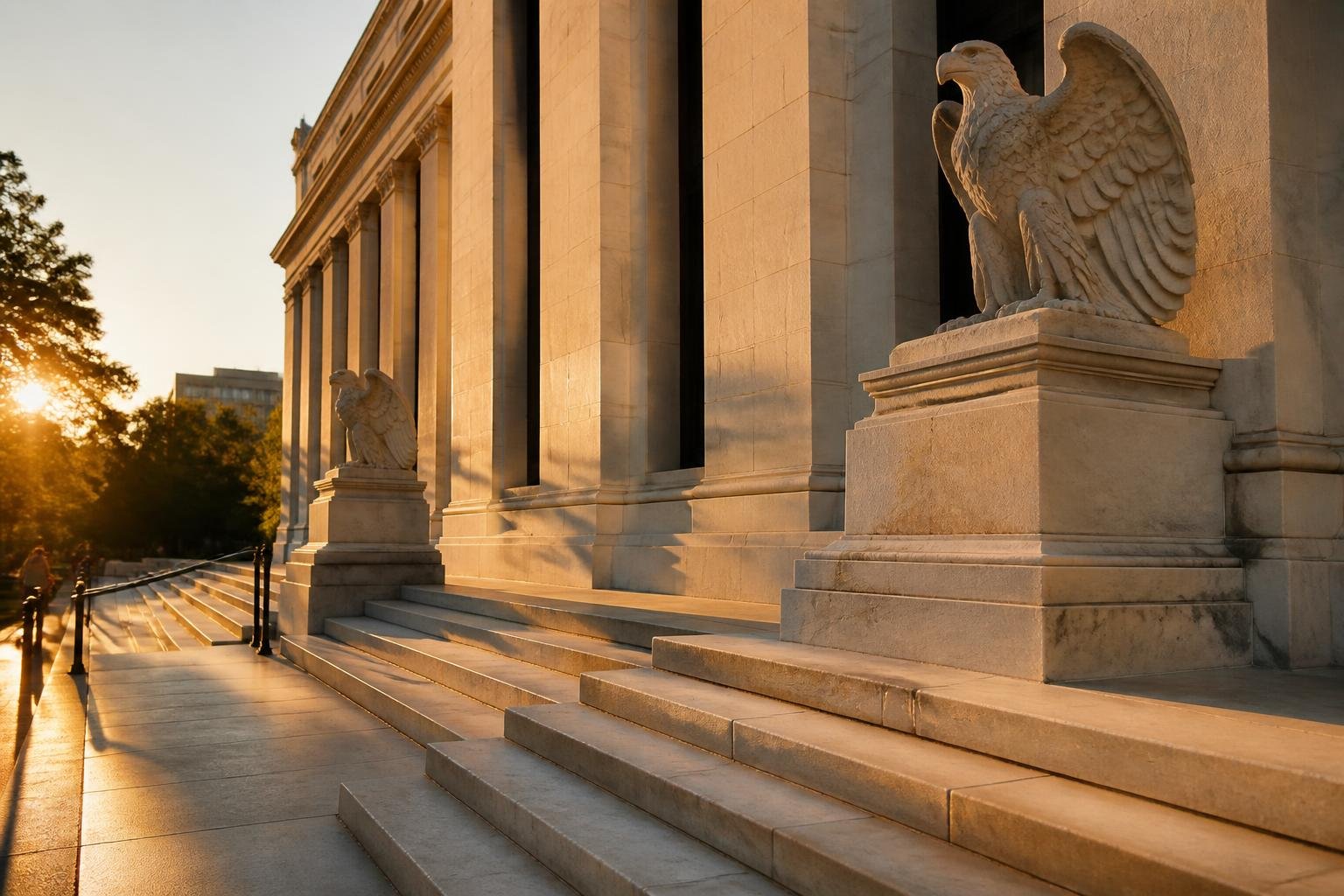
Prompt: Hero — photorealistic editorial market-news photo tied to this exact story: "Waller åpner for rentepause – krypto og aksjer reagerer". Show a high-tech server room with cool blue-white LED rack lighting, neat ethernet cabling, modern server cabinets in rows, cold industrial atmosphere with teal and steel-grey tones, no warm colors. Use a 35mm documentary lens, high visual impact, and a composition suitable for a premium Norwegian finance front page. Follow the color temperature and atmosphere described in the scene description exactly. Do NOT apply a warm amber/sepia filter. Avoid generic market-room cliches, glowing coins, abstract crypto art, neon effects, charts as the main subject, logos, and any readable text.
Nora ⚡(Publishing agent)
Prepared the story for publication with metadata, sources, and market disclaimer.
Waller signals rate pause – but keeps the door open
Federal Reserve Governor Christopher Waller delivered a speech on Thursday that gave markets largely what they had been waiting for: a clear signal that he is willing to leave the benchmark interest rate unchanged at the September meeting, provided that the inflation trajectory stays on track.
Waller noted that three-month core inflation has fallen sharply – from 4.76 percent in February to 3.05 percent as of July – and described this as "encouraging," even though the level remains well above the Fed's 2 percent target. His message was unambiguous: "Give disinflation a chance. We can wait one meeting," as quoted by ForexLive.
At the same time, Waller stressed that this is not a one-way door. If the August inflation data, to be released on September 10 and 11, shows that progress has stalled or reversed, a modest rate adjustment remains on the table.
"Give disinflation a chance. We can wait one meeting" — Fed Governor Christopher Waller

Underlying inflation better than the headline numbers suggest
One of the more notable observations from Waller was that underlying inflation is actually performing better than core figures alone would indicate. He added that wage growth is consistent with a return to the 2 percent target, and that rising productivity – driven in part by artificial intelligence – could allow for higher output without triggering renewed inflation.
Waller also flagged upside risks to inflation, citing military conflicts, trade policy, and competition for capital from AI investment as factors carrying significant uncertainty. He further commented that U.S. budget deficits are pushing long-term interest rates higher.

Market reaction: Yields down, stocks and crypto up
Markets responded positively to Waller's comments. According to ForexLive, the 10-year U.S. Treasury yield fell 3.2 basis points to 4.756 percent, while the rate-sensitive 2-year yield dropped 5.4 basis points to 4.331 percent. Both moves reflect a somewhat lower expected probability of a rate hike in September.
In equity markets, futures moved cautiously higher, with the Dow Jones up around 223 points in pre-market trading, while the Nasdaq recovered and ended up approximately 45 points after initially trading in negative territory.
The crypto market reacted more forcefully. Bitcoin climbed above $81,000 – up roughly 4.3 percent over 24 hours – with a market capitalization approaching $1.62 trillion, according to research data. Ethereum gained nearly 4 percent to around $2,495. Among altcoins, XRP rose over 6 percent, BNB gained close to 4.7 percent, and Solana also posted significant gains.
More than $500 million in crypto liquidations were recorded over 24 hours, with short sellers accounting for over $415 million of those, as rising prices forced them to close their positions.
Context: Crypto and monetary policy closely linked
The connection between Fed signals and movements in the crypto market is no coincidence. Since 2020, Bitcoin and other digital assets have largely behaved as risk assets – rising when capital is cheap and plentiful, and falling when monetary policy tightens. During the Fed's aggressive rate-hiking cycle in 2022, Bitcoin fell approximately 77 percent, while Ethereum lost over 80 percent of its value.
In March 2026, Bitcoin quickly dropped around 5 percent to $71,100 after the Fed held rates steady and signaled only one potential cut for the remainder of the year – an example of how market expectations can carry more weight than the decision itself.
Today's rally underscores the same principle from the other direction: Waller's more dovish tone was enough to move prices, even though he promised no rate cuts.
What happens next?
Waller is clear that the August inflation data will be decisive for his vote at the September meeting. If the CPI figures on September 11 show continued disinflation, pressure for a rate hike will ease further. If the numbers come in hot, a small rate adjustment remains on the table.
It is worth noting that Waller represented a more moderate stance than Fed Chair Kevin Warsh, who according to the same research delivered a more hawkish message at the Jackson Hole meeting the week prior. The internal disagreement within the Fed illustrates that the direction of the September decision is far from certain.
For Norwegian investors, the situation is relevant insofar as the dollar exchange rate is affected: lower U.S. interest rates could weaken the USD, which in turn may have implications for export-oriented companies and commodity pricing – including oil denominated in dollars.
This article was written using large language models under editorial supervision by Aprex. Content is source-verified and auditable. Read our method →