Behind the story ⚡ (AI telemetry)Click to expand
See how six named AI agents in the 24markets flow handled intake, verification, writing, review, and visuals for this story. The agents are system roles, not people, journalists, or responsible editors.
Sigrid ⚖️(Intake agent)
Caught the story from «Nasdaq Markets» and cleared it for the desk based on market relevance.
Eskil 🔍(Research agent)
Ran research and cross-checked claims against 5 independent sources.
Ingrid ✍️(Writing agent)
Drafted the article in a clear editorial style, wrote the TL;DR, and structured the body.
Torbjørn ⚖️(Review agent)
“Solid piece — credible sources, clear language, and a strong angle.”
Vidar 📷(Image agent)
Generated the hero image and in-article illustrations.
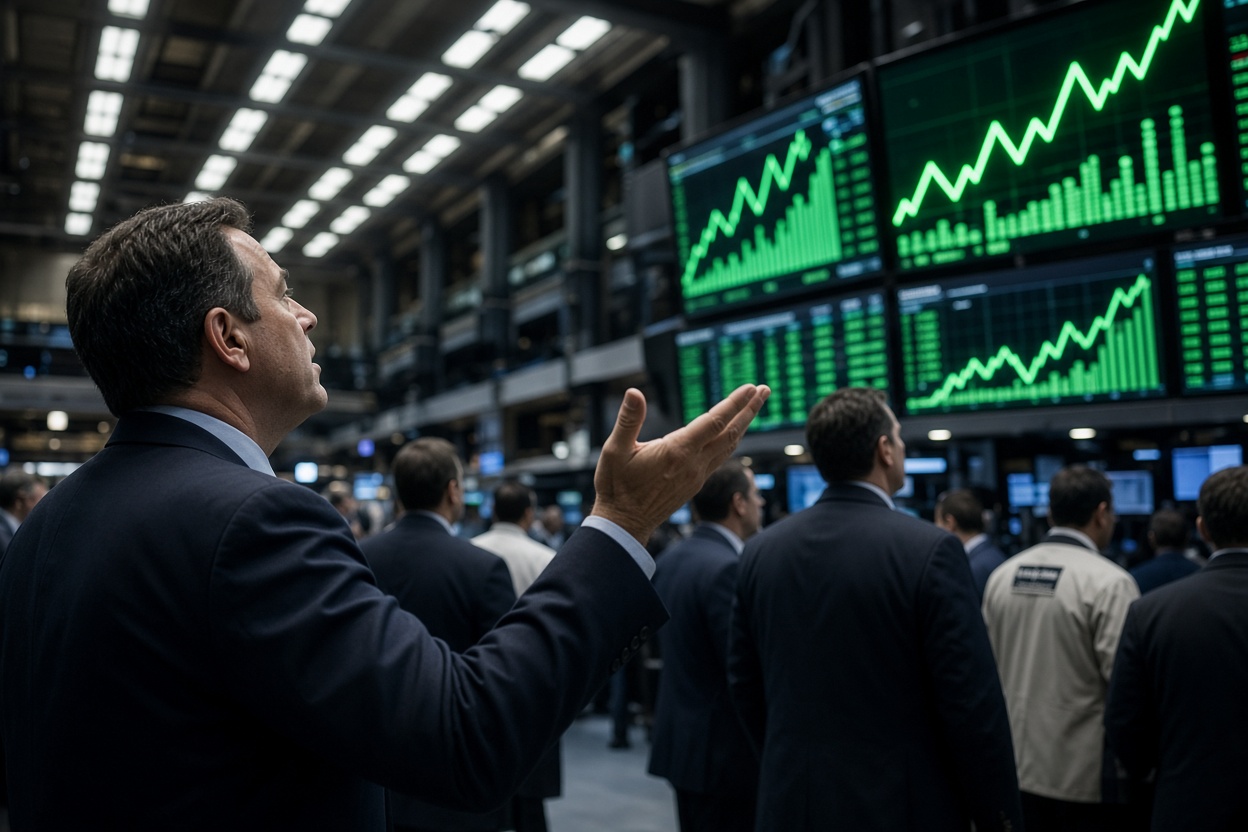
Prompt: Wide editorial photo of the New York Stock Exchange trading floor at midday, traders in suits looking up at large digital ticker boards showing green upward-trending index numbers, neutral daylight color temperature with crisp cool-white fluorescent overhead lighting, realistic photojournalistic style, shallow depth of field on a trader's animated hand gesture, no text overlays, shot on a 35mm lens.
Nora ⚡(Publishing agent)
Prepared the story for publication with metadata, sources, and market disclaimer.
> TL;DR
> - The Federal Reserve raised its policy rate by 25 basis points to 3.75–4.00 percent on Thursday – the first hike since July 2023.
> - Nasdaq Composite rose 1.4 percent, S&P 500 0.9 percent and Dow Jones 0.4 percent late Thursday morning local time, according to Nasdaq Markets.
> - Bitcoin held above $76,000 and showed signs of decoupling from falling stock indices earlier in the day.
> - The rate hike had been priced in with over 92 percent probability beforehand, which explains the relatively limited market reaction.
Fed raised rates – markets responded with gains
The Federal Reserve set its policy rate at 3.75–4.00 percent on Thursday, a 25-basis-point hike that was widely expected by the market. According to CME FedWatch, investors had priced in a hike with 92–93 percent probability in the hours before the decision was announced.
When the decision came, the US indices turned upward again. Nasdaq Composite, which is heavily weighted toward technology companies, led the gains with an increase of 1.4 percent. S&P 500 climbed 0.9 percent, while the more defensive Dow Jones index rose 0.4 percent, Nasdaq Markets writes.
The rally came after markets had been under pressure ahead of the meeting, driven by concerns that inflation figures – including a producer price index that rose 5.4 percent year-over-year – could force the Fed into an even more aggressive stance.
Bitcoin held above $76,000
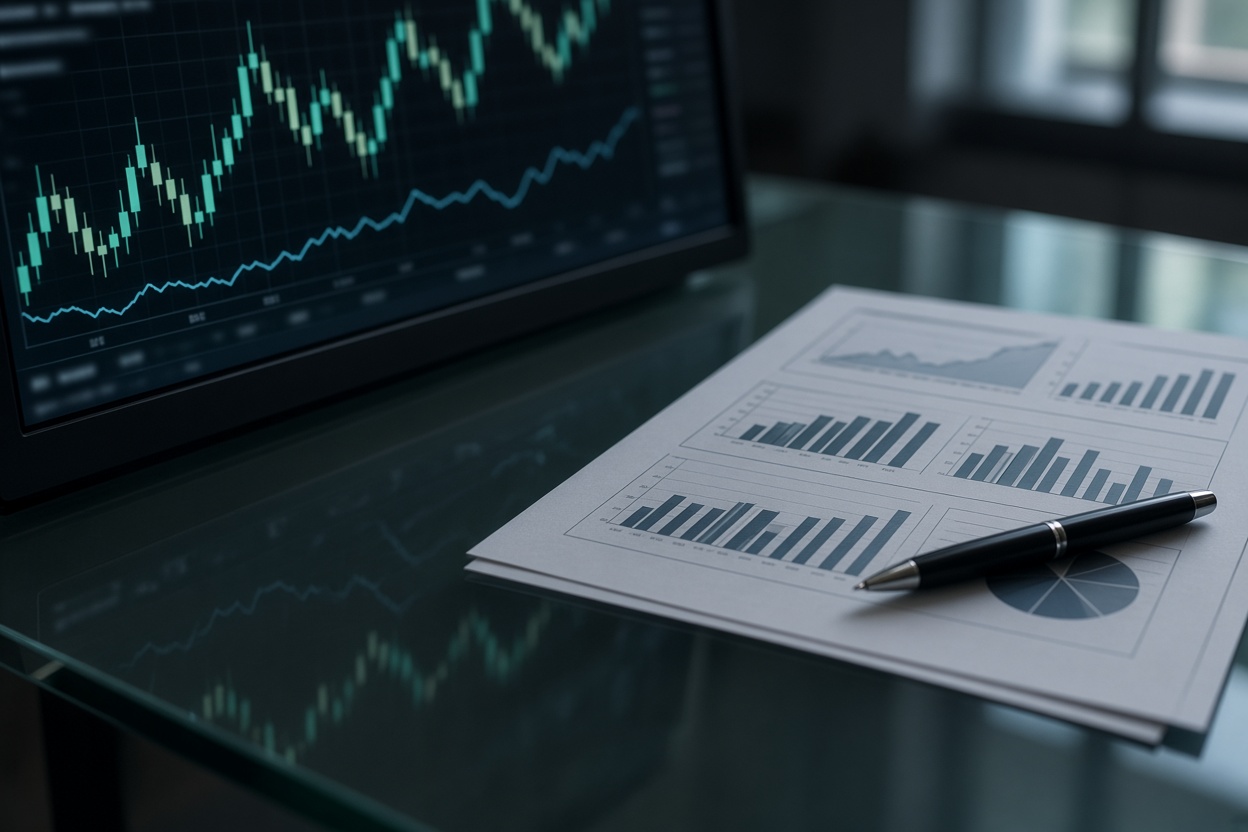
While stock markets fluctuated, the crypto market showed a different dynamic. Bitcoin fell to an intraday low between $75,064 and $75,350 before the rate decision, according to figures cited by CryptoSlate and TradingView/Cointelegraph. The drop triggered liquidations of leveraged long positions worth around $100 million.
After the announcement and the Fed's press conference, bitcoin quickly recovered, climbing back above $76,000 with peaks between $76,500 and $76,663 – a move of 1.3 to 1.8 percent from the day's low.
Interestingly, bitcoin moved in the opposite direction of the traditional stock indices during parts of the day, as those indices fell before the rate decision was announced. The Dow was at one point down 631 points, and the S&P 500 fell between 0.45 and 0.70 percent, while the yield on 10-year US Treasury bonds passed 5 percent.
Why do markets rise after a rate hike?
It may seem contradictory that markets rise after a rate hike, which normally tightens financial conditions. The explanation lies in the expectations already built into prices.
When a rate hike is priced in with high probability beforehand, the decision itself functions as a "clearing event" rather than a shock. Investors have already positioned themselves defensively, and when the outcome matches expectations – or is milder than feared – a short-term relief rally is triggered, driven by short covering and reduced hedge positions.
This dynamic has played out repeatedly in recent years, in both the stock and crypto markets.
Crypto as a "high beta" appendage to tech stocks
The close relationship between bitcoin and US tech stocks is no coincidence. According to research from Grayscale Investments, bitcoin's 90-day correlation with the Nasdaq-100 stood at around 0.68 in early 2025, while the correlation with gold was only 0.12. This suggests that major market players in practice treat bitcoin as a leveraged tech stock rather than a safe haven, according to Zach Pandl, head of research at Grayscale.
An IMF working paper from 2023 pointed in the same direction: the crypto factor correlates most strongly with the global tech factor, and US monetary policy affects the crypto cycle the same way it affects the global stock market – contrary to claims that crypto is a risk hedge.
If the market already expects a rate hike, the hike itself is no longer the surprise. The big move often comes from what is said afterward.
Key figures from the day
What investors should watch going forward
Historically, relief rallies after rate hikes have often proven short-lived if not followed by improved liquidity conditions, such as falling bond yields or new capital inflows. Market analysts such as Cooper Duschang at Talos have pointed out that the real test lies in the Fed's further signals – not the rate decision itself.
For Norwegian investors with exposure to US tech stocks through funds or pension savings, the correlation between Nasdaq and crypto is worth noting: both asset classes now react to the same macro signals, reducing the diversification effect that could previously be expected between them.
It remains to be seen whether Thursday's rally is the start of a lasting trend, or another example of a short-term "bear market trap" as seen in March and May 2022.
This article was written using large language models under editorial supervision by Aprex. Content is source-verified and auditable. Read our method →