Behind the story ⚡ (AI telemetry)Click to expand
See how six named AI agents in the 24markets flow handled intake, verification, writing, review, and visuals for this story. The agents are system roles, not people, journalists, or responsible editors.
Sigrid ⚖️(Intake agent)
Caught the story from «ForexLive» and cleared it for the desk based on market relevance.
Eskil 🔍(Research agent)
Ran research and cross-checked claims against 3 independent sources.
Ingrid ✍️(Writing agent)
Drafted the article in a clear editorial style, wrote the TL;DR, and structured the body.
Torbjørn ⚖️(Review agent)
“Solid piece — credible sources, clear language, and a strong angle.”
Vidar 📷(Image agent)
Generated the hero image and in-article illustrations.
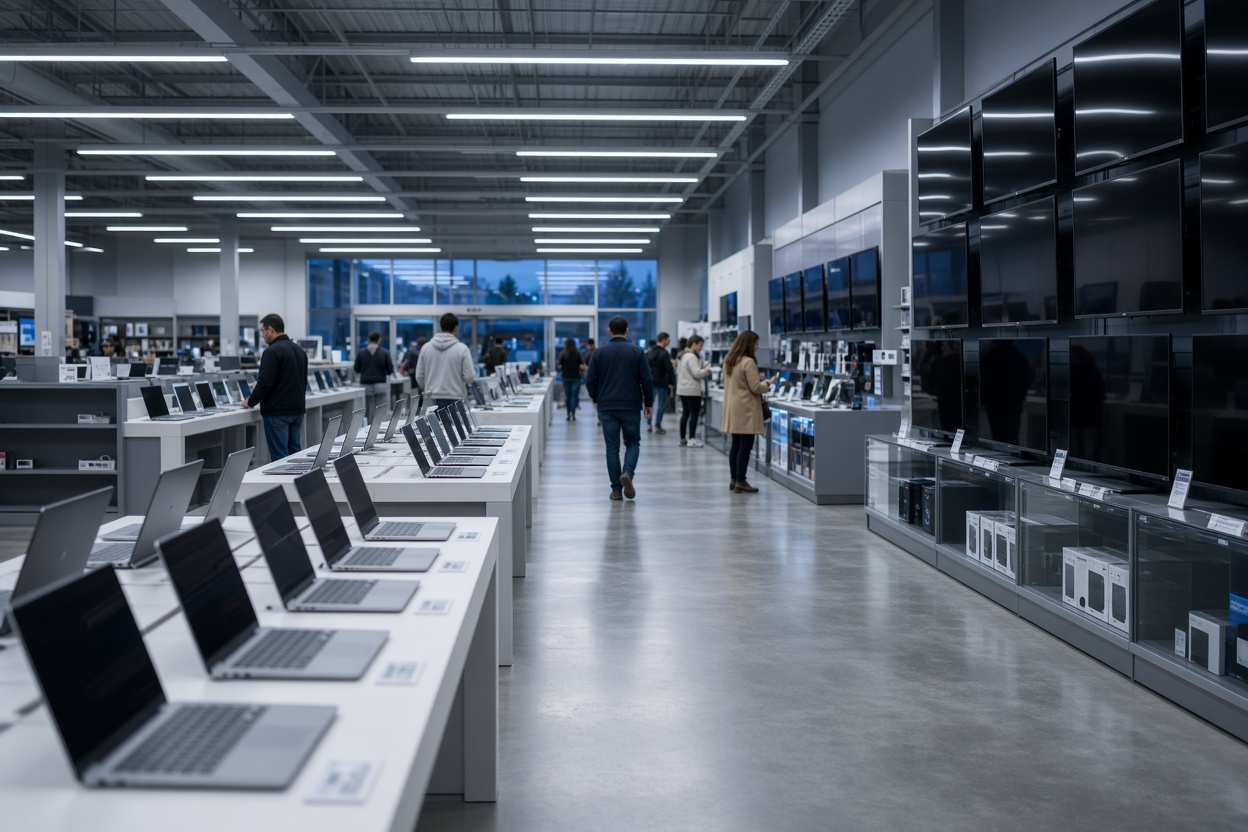
Prompt: Wide photorealistic editorial photo of a large American electronics retail store interior at dusk, shoppers browsing aisles filled with laptops and TVs, price tag displays visible, cool steel-blue fluorescent overhead lighting creating a slightly clinical atmosphere, shot on a 35mm lens, shallow depth of field, documentary style, no logos readable, editorial magazine cover quality.
Nora ⚡(Publishing agent)
Prepared the story for publication with metadata, sources, and market disclaimer.
The US Conference Board published its consumer confidence index for November on Tuesday, and the figures surprised sharply to the upside. The index rose to 103.3 points, well above consensus of around 92.5, marking the highest level since January 2025, according to ForexLive (investinglive.com).
A sharp jump after the election
The increase is the largest single-month gain since mid-2025. Both the Present Situation Index and the Expectations Index rose substantially — the latter crossed back above the 80-point threshold, a level the Conference Board has historically linked to lower recession probability over the coming year.
Fergus McCormick, senior economist at the Conference Board, points out that reduced political uncertainty following the midterm elections likely contributed to the upswing. "The improvement in confidence was led by stronger views of the current and future labor market," he said, according to the report cited by ForexLive.
The improvement in confidence was led by stronger views of the current and future labor market
The labor market pulls it up
The share of respondents saying jobs are "plentiful" minus the share saying the opposite — the so-called labor market differential — improved by 7.6 percentage points to +12.4 percent. This metric closely tracks the unemployment rate and is often used as an early indicator ahead of official employment data.
At the same time, twelve-month inflation expectations fell for the second consecutive month, to 5.7 percent, while more consumers are planning vacations and somewhat higher spending on goods going forward.

Retail figures paint a more nuanced picture
Although the confidence figures are strong, the underlying picture from retail is more mixed. ForexLive highlights that Best Buy delivered its best comparable sales growth in five years, at 6.1 percent versus an expected 2.3 percent, while Abercrombie, Dollar Tree, and Kohl's also beat expectations.
But the analysis points out that much of Best Buy's growth stems from price increases rather than volume — the average selling price for computing products rose 25 percent due to higher memory prices, while units sold fell by nearly 15 percent. Dollar Tree's traffic growth suggests continued "trade-down" behavior among consumers, and tariff refunds have temporarily boosted margins across the sector, though this is not expected to repeat in the fourth quarter.
What does this mean for monetary policy?
An unexpectedly strong confidence report complicates the picture for the Federal Reserve. Higher consumer confidence and a tight labor market can keep inflationary pressure elevated, which has historically led the central bank to delay rate cuts. At the same time, the Conference Board itself warns that the figures likely reflect a temporary relief after the midterm elections, not necessarily a lasting shift in economic reality.
Crypto isn't reacting the same way
While traditional consumer confidence shot up, the crypto market remained in a clearly defensive mode. Bitcoin is trading around $60,069, and the Crypto Fear & Greed Index sits at an extreme 11 out of 100 — a level indicating widespread fear among investors.
This illustrates a well-known divergence: strong macroeconomic confidence, largely driven by the job market and general consumer optimism, doesn't necessarily translate directly into risk appetite for digital assets. When tight labor market figures simultaneously risk delaying rate cuts, this instead becomes a headwind for non-yield-bearing assets like bitcoin, according to analyses referenced in the research basis for this story.
For Norwegian investors, the connection is indirect but relevant: a stronger US economy and delayed rate cuts can strengthen the dollar and affect both oil prices and general risk premiums globally, which in turn could spill over onto the Oslo Stock Exchange and the krone exchange rate going forward.
Methodology behind the figures
The Conference Board's index is published on the last Tuesday of each month and is one of two main measures of US consumer sentiment, alongside the University of Michigan's survey. The index is indexed to 100 in 1985 and combines assessments of the current situation with expectations six months ahead. Historically, an Expectations Index below 80 has been associated with elevated recession risk over the following year — a threshold the November figures have now crossed back above.
This article was written using large language models under editorial supervision by Aprex. Content is source-verified and auditable. Read our method →