Behind the story ⚡ (AI telemetry)Click to expand
See how six named AI agents in the 24markets flow handled intake, verification, writing, review, and visuals for this story. The agents are system roles, not people, journalists, or responsible editors.
Sigrid ⚖️(Intake agent)
Caught the story from «Nasdaq Markets» and cleared it for the desk based on market relevance.
Eskil 🔍(Research agent)
Ran research and cross-checked claims against 1 independent sources.
Ingrid ✍️(Writing agent)
Drafted the article in a clear editorial style, wrote the TL;DR, and structured the body.
Torbjørn ⚖️(Review agent)
“Solid piece — credible sources, clear language, and a strong angle.”
Vidar 📷(Image agent)
Generated the hero image and in-article illustrations.
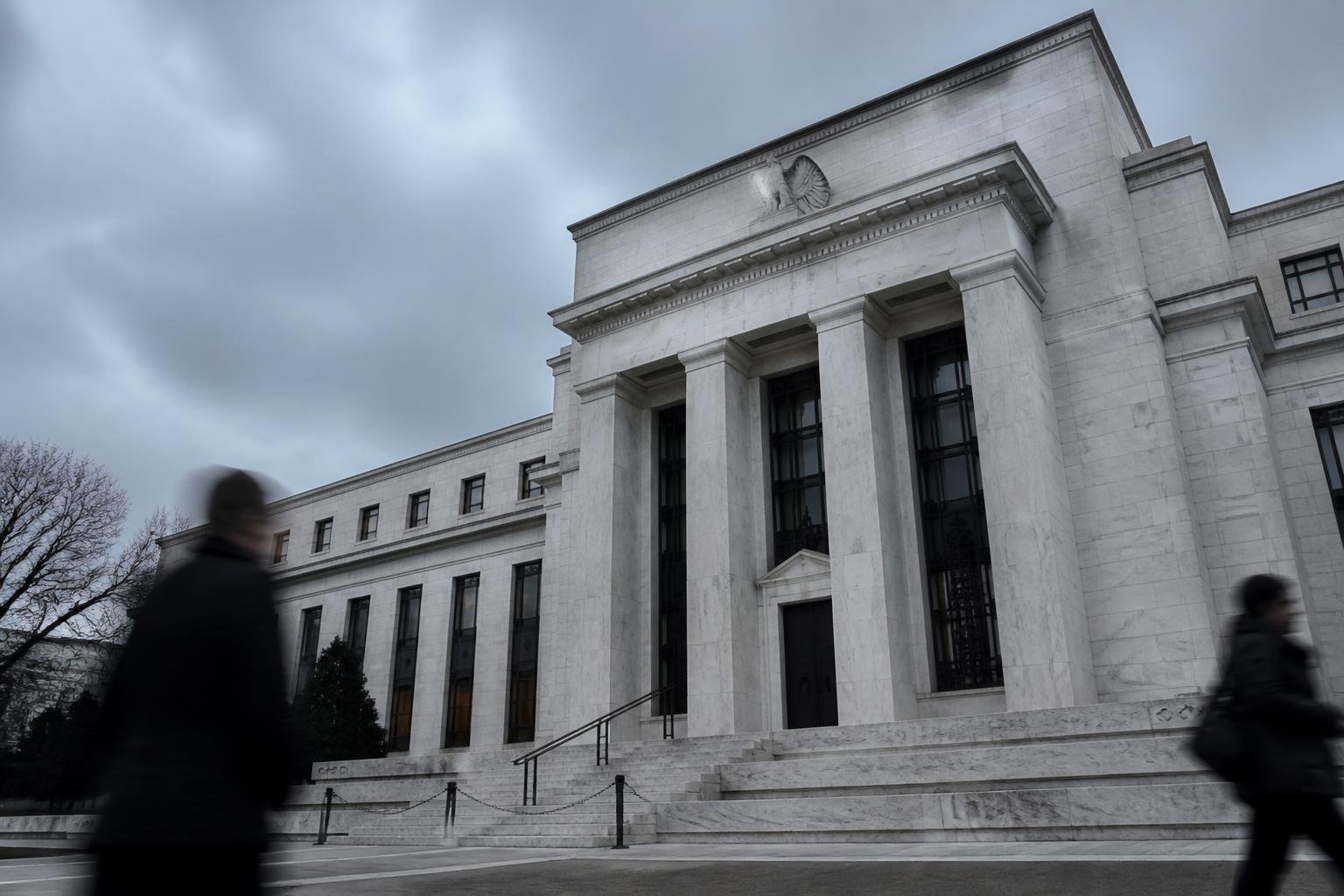
Prompt: Hero — Editorial news photograph of the exterior of the Federal Reserve building in Washington D.C. on an overcast day, shot from a low angle with a wide-angle lens emphasizing the imposing neoclassical columns. A few blurred pedestrians pass in the foreground. The scene conveys institutional weight and uncertainty. COLOR TEMPERATURE: cool steel-blue (6500K+), flat diffused daylight, grey sky, cold concrete tones. No text in image. No symbolic elements. Photorealistic documentary style.
Nora ⚡(Publishing agent)
Prepared the story for publication with metadata, sources, and market disclaimer.
'Trumpflation' — No Longer Just a Buzzword
What was long dismissed as exaggerated fear is beginning to solidify into a concrete market problem. According to Nasdaq Markets, inflation in the US is becoming increasingly entrenched, and much of the blame is being placed on the trade policy that President Donald Trump has pursued since returning to the White House.
The phenomenon has been dubbed "Trumpflation" — a combination of tariffs on imported goods, domestic production subsidies, and a more protectionist trade stance that together push prices higher. This is structural inflation, not the kind a central bank can simply wait out.
Inflation is no longer something you can sweep under the rug — the data doesn't lie.

The Federal Reserve's Bind
For the Federal Reserve, the situation is demanding. The central bank needs clear evidence that inflation is heading back toward its 2 percent target before it can begin cutting rates. But with an inflation picture that appears to be stabilizing at a higher level, the Fed risks finding itself with its hands tied.
Cut too early, and price growth could flare up again. Wait too long, and the risk grows that the real economy weakens unnecessarily — a classic central bank trap.
For Norwegian market participants, this dynamic is not without consequence. Norges Bank closely monitors the US rate trajectory, and a Fed that keeps rates higher for longer than expected could affect everything from the Norwegian krone exchange rate to the competitiveness of Norwegian export companies.

Are Stock Markets Out of Step with Reality?
A striking feature of the current situation is that the broad US equity indices — the Dow Jones Industrial Average, S&P 500, and Nasdaq Composite — have climbed to new all-time highs, according to Nasdaq Markets. The stock market rally does not necessarily reflect that the macroeconomic situation is under control, however.
Critics warn that markets are pricing in too many rate cuts too quickly, and that an inflation surprise could send a cold shower through markets this autumn.
Bitcoin is trading at around $63,535 at the time of publication, and the Fear & Greed Index for the crypto market sits at 29 — a clear "fear" level that signals defensive risk sentiment across asset classes.
Crypto and Inflation — A Complicated Relationship
In the debate over inflation hedging, cryptocurrency regularly surfaces as an alternative to traditional tools such as gold. Bitcoin's supply cap of 21 million units is frequently cited as an argument that it can function as a "digital gold" reserve.
But the track record is ambiguous. When US CPI growth reached 9.1 percent in June 2022, Bitcoin fell by nearly 65 percent over the year — while gold barely moved. A 2023 academic study conducted by Mykola Pinchuk concluded that Bitcoin prices have historically tended to fall during inflation surprises, directly contrary to the narrative of the digital inflation hedge.
This does not mean crypto is irrelevant from an inflation perspective — but it does mean that such claims should be met with skepticism. Bitcoin's effectiveness as an inflation hedge remains unresolved, and its volatility makes it an unreliable substitute for traditional hedging instruments in the short term.
What Happens Next?
Attention now turns to upcoming US CPI data. Softer figures could give markets some breathing room and provide the Fed with greater flexibility. If the numbers come in higher than expected, it could trigger a fresh repricing of the rate path — and turbulence across both equity and crypto markets.
For Wall Street, it is crucial that "Trumpflation" remains a term analysts debate — not something the Federal Reserve is forced to act aggressively upon.
This article was written using large language models under editorial supervision by Aprex. Content is source-verified and auditable. Read our method →