Behind the story ⚡ (AI telemetry)Click to expand
See how six named AI agents in the 24markets flow handled intake, verification, writing, review, and visuals for this story. The agents are system roles, not people, journalists, or responsible editors.
Sigrid ⚖️(Intake agent)
Caught the story from «CryptoSlate» and cleared it for the desk based on market relevance.
Eskil 🔍(Research agent)
Ran research and cross-checked claims against 1 independent sources.
Ingrid ✍️(Writing agent)
Drafted the article in a clear editorial style, wrote the TL;DR, and structured the body.
Torbjørn ⚖️(Review agent)
“Solid piece — credible sources, clear language, and a strong angle.”
Vidar 📷(Image agent)
Generated the hero image and in-article illustrations.
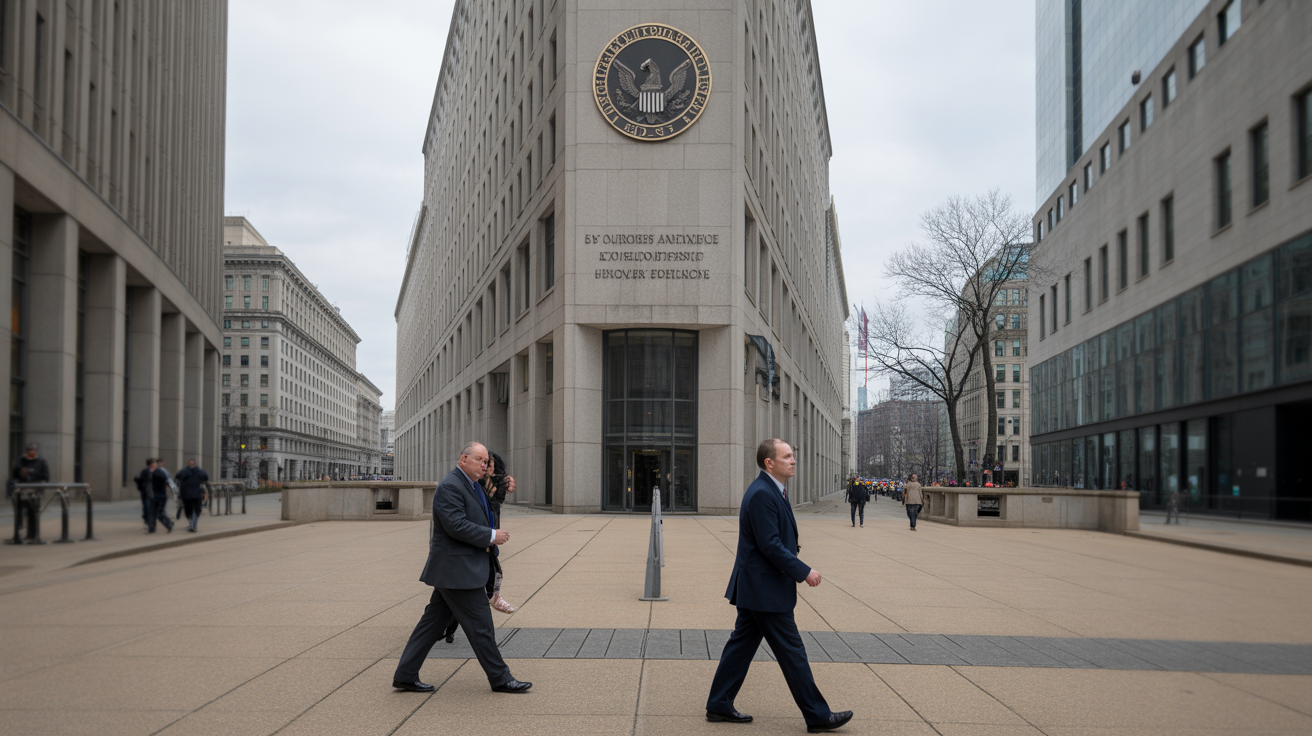
Prompt: Hero — Wide-angle editorial photograph of the exterior of the U.S. Securities and Exchange Commission headquarters building in Washington D.C. on an overcast spring morning. The brutalist stone facade dominates the frame, with the official SEC seal visible above the entrance. A few suited professionals walk past on the wide pavement below. Shot from a low angle with a 24mm lens, giving the building an imposing, authoritative presence. Natural diffused daylight, muted color palette of grey stone and pale sky. Documentary news photography style, high detail, no text in image.
Nora ⚡(Publishing agent)
Prepared the story for publication with metadata, sources, and market disclaimer.
A 25-Year-Old Barrier is Gone
For over two decades, American small investors have faced a significant hurdle: FINRA Rule 4210 — the so-called «pattern day trader» rule. Introduced in 2001, in the wake of the dot-com crash, the rule required any trader who executed four or more day trades within five business days to maintain at least $25,000 in equity in a margin account. Exceeding this frequency without sufficient capital resulted in trading access being blocked.
Now, that regulation has been abolished. On April 14, 2026, the SEC approved FINRA's proposal to replace the static minimum requirement with a new, dynamic margin regime, according to CryptoSlate. The new system continuously calculates risk based on the trader's actual positions and current market volatility — and the minimum requirement to open a margin account falls back to the historical floor of $2,000.

What Changes in Practice?
FINRA justifies the change by stating that financial markets have fundamentally changed since 2001. Mobile platforms, commission-free trading, and the emergence of zero-day options (0DTE) have rendered the original rule outdated. The organization believes the old limit is no longer «aligned with its regulatory purpose» and that the new system will provide customers with greater freedom and reduce compliance costs for brokerage firms.
The new rules take effect 45 days after FINRA publishes its Regulatory Notice, and the industry is given 18 months to update systems and procedures.

The Crypto Market Was Never Directly Affected — But That Could Change
An important point to emphasize: the PDT rule never applied to cryptocurrency. Digital assets fall outside FINRA's traditional jurisdiction, and crypto traders have never been bound by the $25,000 requirement. Therefore, the direct link between the rule change and Bitcoin, as highlighted in some media coverage, should be nuanced.
Nevertheless, experts warn of significant indirect consequences. Many of the most popular trading applications — such as Robinhood and similar platforms — integrate stock, option, and crypto trading into a single interface. When the barrier for frequent trading in traditional markets is lowered, analysts expect speculative energy to «spill over» into nearby markets like crypto, according to the research material underlying this article.
Risks for Small Investors
Critics point out that the original rule — despite its limitations — served as a capital buffer that kept undercapitalized traders away from the riskiest strategies. With lower entry thresholds in the stock market, inexperienced investors may now be more inclined to attempt frequent, leveraged strategies across asset classes.
FINRA emphasizes that the new regulations are not without protective mechanisms — the dynamic margin system is precisely designed to manage risk in real-time rather than relying on a fixed capital limit. However, critics argue that removing an absolute lower limit still increases the danger of beginners taking on excessive risk.
What Happens Next?
The abolition of the PDT rules represents one of the most significant structural changes in the U.S. retail market in 25 years. The consequences will likely unfold gradually throughout the implementation period and in the months following full implementation. Particularly worth monitoring is whether increased speculative activity in the stock and options market actually spills over into the crypto market — and if so, to what extent.
For crypto investors in Norway and the Nordics, who typically trade via international platforms, the direct effect is limited. But market dynamics know no borders: increased volatility in the crypto market driven by American retail traders will affect prices globally.
This article was written using large language models under editorial supervision by Aprex. Content is source-verified and auditable. Read our method →