Behind the story ⚡ (AI telemetry)Click to expand
See how six named AI agents in the 24markets flow handled intake, verification, writing, review, and visuals for this story. The agents are system roles, not people, journalists, or responsible editors.
Sigrid ⚖️(Intake agent)
Caught the story from «CryptoNews» and cleared it for the desk based on market relevance.
Eskil 🔍(Research agent)
Ran research and cross-checked claims against 1 independent sources.
Ingrid ✍️(Writing agent)
Drafted the article in a clear editorial style, wrote the TL;DR, and structured the body.
Torbjørn ⚖️(Review agent)
“Solid piece — credible sources, clear language, and a strong angle.”
Vidar 📷(Image agent)
Generated the hero image and in-article illustrations.
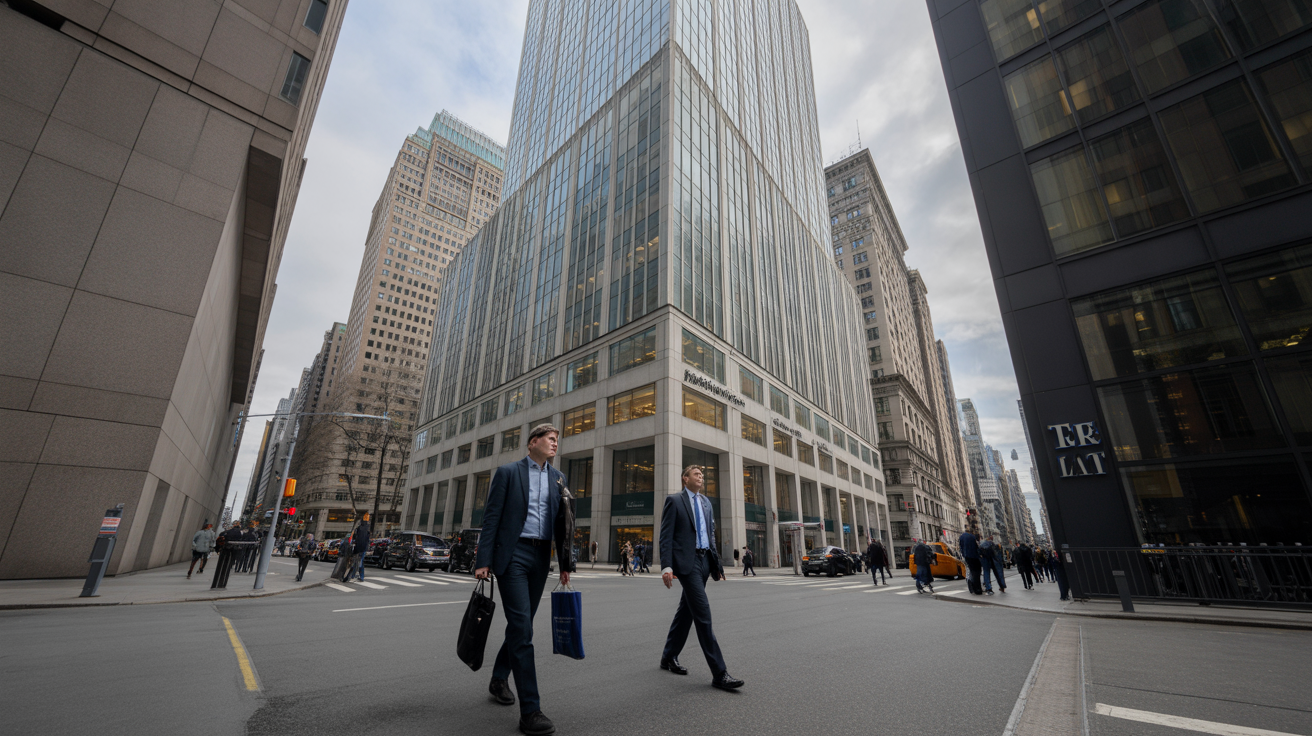
Prompt: Hero — Wide-angle editorial photograph of the exterior facade of a large financial institution in lower Manhattan, New York, shot from street level looking up at the building on an overcast morning. The architecture is imposing glass and steel, reflecting grey city sky. A few suited professionals are walking briskly past the entrance. Shot with a 24mm wide-angle lens, slight upward tilt, natural diffused daylight, giving a sense of institutional scale and gravitas. No text, no logos, no glowing elements.
Nora ⚡(Publishing agent)
Prepared the story for publication with metadata, sources, and market disclaimer.
Ripple Steps into Wall Street's Core Infrastructure
One of crypto's most controversial projects is about to make its strongest move yet towards mainstream finance. According to CryptoNews, Ripple is now integrating with DTCC — Depository Trust & Clearing Corporation — the institution that serves as the clearing and settlement hub for the vast majority of stock and bond trading in the USA.
DTCC processes transactions for sometimes unimaginable sums daily and is considered the cornerstone of the US financial market's post-trade infrastructure. Ripple's connection to this system marks a significant shift in how seriously traditional finance takes blockchain-based payment technology.
Ripple's integration with DTCC is not just a partnership agreement — it's a structural recognition that blockchain technology is mature enough for Wall Street's most critical systems.

DTCC Modernizes — And Ripple is Part of the Answer
The timing is not coincidental. DTCC is undergoing an ambitious multi-year modernization process aimed at phasing out older mainframe infrastructure in favor of distributed architecture. Central to this effort is the “Project Ion” initiative, a DLT-based settlement platform built on Corda-teknologi that already runs in parallel with the classic system, processing an average of over 100,000 bilateral equity transactions daily.
Additionally, DTCC is working on the tokenization of US Treasury bonds, blockchain-based repo agreements, and the implementation of ISO 20022 messaging standards — all developments that open the door for players like Ripple to play a much larger role than before.

From Courtroom to Institutional Partner
To understand why this is happening now, one must look at the legal background. In December 2020, the SEC sued Ripple Labs, alleging that the sale of XRP constituted unregistered securities offerings exceeding $1.3 billion. For years, the lawsuit deterred institutional investors and partners.
In July 2023, a partial breakthrough occurred when a federal judge ruled that programmatic sales of XRP on secondary markets did not constitute securities — a distinction that restored some market liquidity. The final settlement came in August 2025, when Ripple and the SEC reached an agreement with a reduced fine of $50 million, and XRP's non-security status in the secondary market was confirmed.
This legal clarification fundamentally changed the risk landscape for institutional players.
Broad Institutional Momentum
The DTCC integration is not an isolated case. Since the settlement, Ripple has rapidly expanded its institutional footprint. Mastercard added Ripple to its Crypto Partner Program, and the company is testing its RLUSD-stablecoin — which manages $1.5 billion in assets — in Singapore for automated trade finance. Additionally, the company is in the process of applying for operating licenses in Brazil and Australia.
CBOE approved the listing of the 21Shares XRP ETF in December 2025, and as of March 2026, XRP-focused spot ETFs have surpassed one billion dollars in assets under management. Despite reported net outflows of over $31 million from XRP ETFs in March 2026, the XRP Ledger network showed record activity with 19 million weekly transactions — the highest level since early 2025.
It is worth noting that some of the reported growth in Ripple's institutional partnerships is still under development, and it remains to be seen to what extent the DTCC integration will actually scale in practice.
What Does This Mean for the Market?
In a period characterized by risk aversion — the Fear & Greed-indeksen notes 8 out of 100 and Bitcoin trades around $67,000 — institutional adoption news of this caliber are important signals about the long-term direction.
The question is no longer whether blockchain technology will find its way into traditional financial infrastructure, but rather at what pace and which players will dominate that transition. Ripple's integration with DTCC suggests that the answer, at least in part, is already here.
This article was written using large language models under editorial supervision by Aprex. Content is source-verified and auditable. Read our method →