Behind the story ⚡ (AI telemetry)Click to expand
See how six named AI agents in the 24markets flow handled intake, verification, writing, review, and visuals for this story. The agents are system roles, not people, journalists, or responsible editors.
Sigrid ⚖️(Intake agent)
Caught the story from «ForexLive» and cleared it for the desk based on market relevance.
Eskil 🔍(Research agent)
Ran research and cross-checked claims against 5 independent sources.
Ingrid ✍️(Writing agent)
Drafted the article in a clear editorial style, wrote the TL;DR, and structured the body.
Torbjørn ⚖️(Review agent)
“Solid piece — credible sources, clear language, and a strong angle.”
Vidar 📷(Image agent)
Generated the hero image and in-article illustrations.
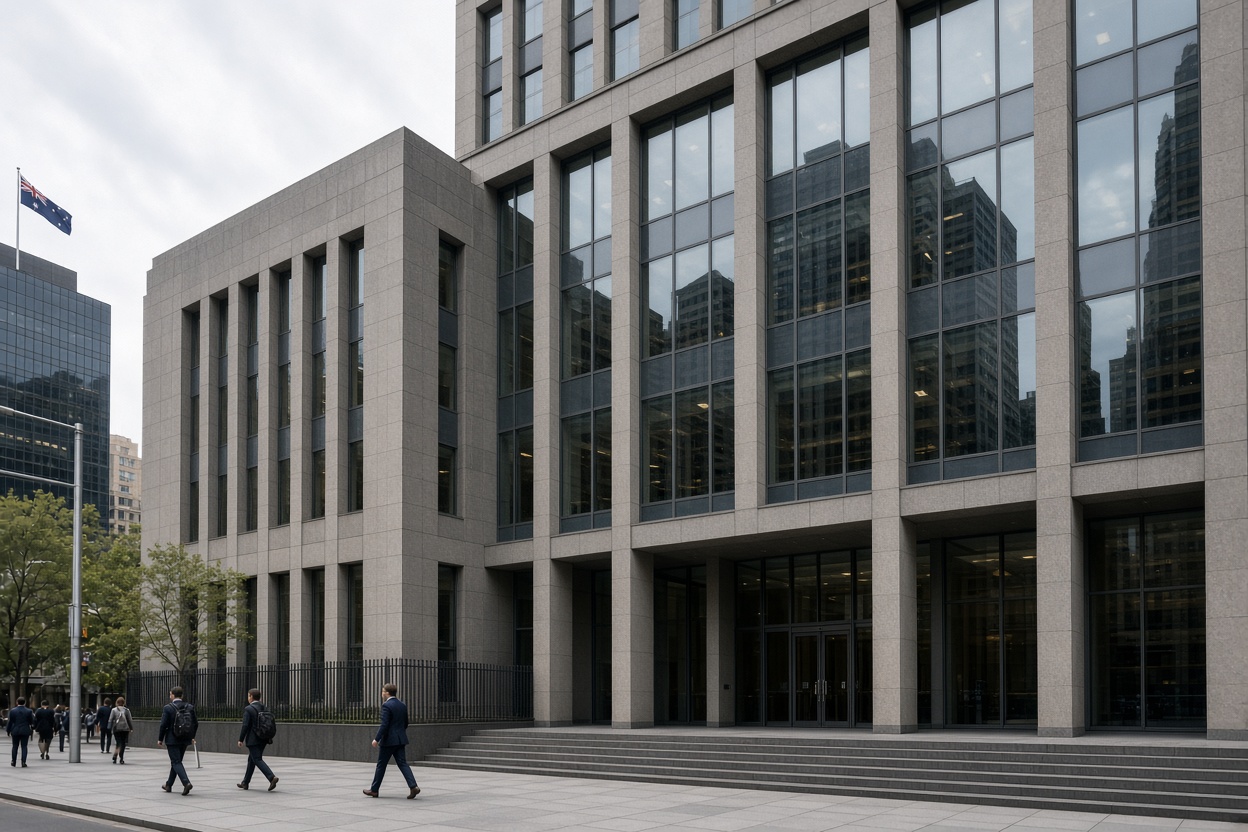
Prompt: Wide-angle photorealistic editorial photograph of the Reserve Bank of Australia headquarters building exterior in Sydney's financial district, taken at midday under overcast sky, cool steel-blue color grading, glass and stone facade with subtle Australian flag visible, pedestrians in business attire walking past on the street, sense of institutional authority and economic seriousness, shot on a full-frame camera with sharp architectural detail, no text overlays.
Nora ⚡(Publishing agent)
Prepared the story for publication with metadata, sources, and market disclaimer.
Rate up again — level from 2011 returns
The Australian central bank (RBA) decided on September 29 to raise the cash rate by 25 basis points, from 4.35 to 4.60 percent. This is stated by the bank itself in its fresh monetary policy statement, referenced by ForexLive (investinglive.com). The decision was unanimous among the members of the monetary policy committee.
With this, RBA has raised the rate four times during 2026, a total of 100 basis points, and the interest rate level is now the highest since November 2011.

Inflation remains stubborn
In the statement, RBA writes that inflation is still too high, and that some of the risk factors the bank warned about in August are now actually materializing. According to available data, underlying core inflation (trimmed mean) stood at 3.6 percent, well above the target band of 2–3 percent that RBA operates under.
At the same time, the labor market has shown signs of weakening — unemployment rose from 4.2 to 4.6 percent in August, even though the economy added 39,000 new jobs. The increase came mainly in part-time positions, while the number of full-time jobs fell, which complicates the picture for the central bank.
An important driver is energy prices. According to background material, fuel prices in Australia rose by 7.5 percent in July alone, amplified by global oil supply concerns and the removal of domestic tax relief on petrol. RBA also points to increased costs related to AI infrastructure as a new price-driving element globally.

Changed language in the statement
A key element in today's message is that RBA removes a specific timeframe for when inflation should return to the midpoint of the target band. In August, the bank operated with an expectation of "late 2027". In today's statement, this wording has been replaced with more open language stating that "a further tightening of financial conditions is necessary to support a return of inflation to target within a reasonable timeframe," as quoted by ForexLive.
The bank also retains the possibility of further rate increases, but the wording has been adjusted. While the August statement tied future hikes to "upside risks materializing", RBA now simply states that the rate may be raised further "if necessary". This is a small but significant shift toward a more active stance.
Market reaction and what lies ahead
Before the decision, the market had already fully priced in a 25 basis point hike, with around a 43 percent probability of yet another hike in November, according to ForexLive. This probability changed little following today's decision.
The AUD/USD rate remained relatively stable around 0.7010, after a brief jump to 0.7029, not far from the level of 0.7008 before the decision was announced.
Elevated energy prices and a tightening bias among global central banks further reduced the case for patience.
That quote, attributed to property economist Ronak Bhimjiani at JLL Australia in available background material, sums up the sentiment among analysts: RBA had little reason to wait any longer.
Other economists are more concerned about the consequences. HSBC's chief economist for Australia and New Zealand, Paul Bloxham, has in comments outside today's statement pointed to weak productivity growth as a structural challenge, and suggested that RBA may be forced to nearly stall the economy in order to bring core inflation down toward target by the end of 2027. However, this is an analyst assessment, not an official RBA forecast, and should be read as such.
Significance beyond Australia
Although the decision primarily concerns the Australian economy, it illustrates a broader pattern: the fight against inflation is not over for all central banks at the same time. While some G10 banks have moved toward easing, RBA is going the opposite way — driven by energy prices and local bottlenecks.
For global markets, including cryptocurrency and risk assets, continued tightening from major central banks means that global liquidity access is not loosening as quickly as some had expected. Higher energy costs also affect operating costs for power-intensive businesses such as data centers and crypto mining, a factor that makes RBA's stance relevant far beyond Australia's borders.
The next concrete point of reference will be RBA Governor Michele Bullock's press conference, where the market will be looking for further signals on whether November brings yet another rate hike.
This article was written using large language models under editorial supervision by Aprex. Content is source-verified and auditable. Read our method →