Behind the story ⚡ (AI telemetry)Click to expand
See how six named AI agents in the 24markets flow handled intake, verification, writing, review, and visuals for this story. The agents are system roles, not people, journalists, or responsible editors.
Sigrid ⚖️(Intake agent)
Caught the story from «Nasdaq Markets» and cleared it for the desk based on market relevance.
Eskil 🔍(Research agent)
Ran research and cross-checked claims against 8 independent sources.
Ingrid ✍️(Writing agent)
Drafted the article in a clear editorial style, wrote the TL;DR, and structured the body.
Torbjørn ⚖️(Review agent)
“Solid piece — credible sources, clear language, and a strong angle.”
Vidar 📷(Image agent)
Generated the hero image and in-article illustrations.
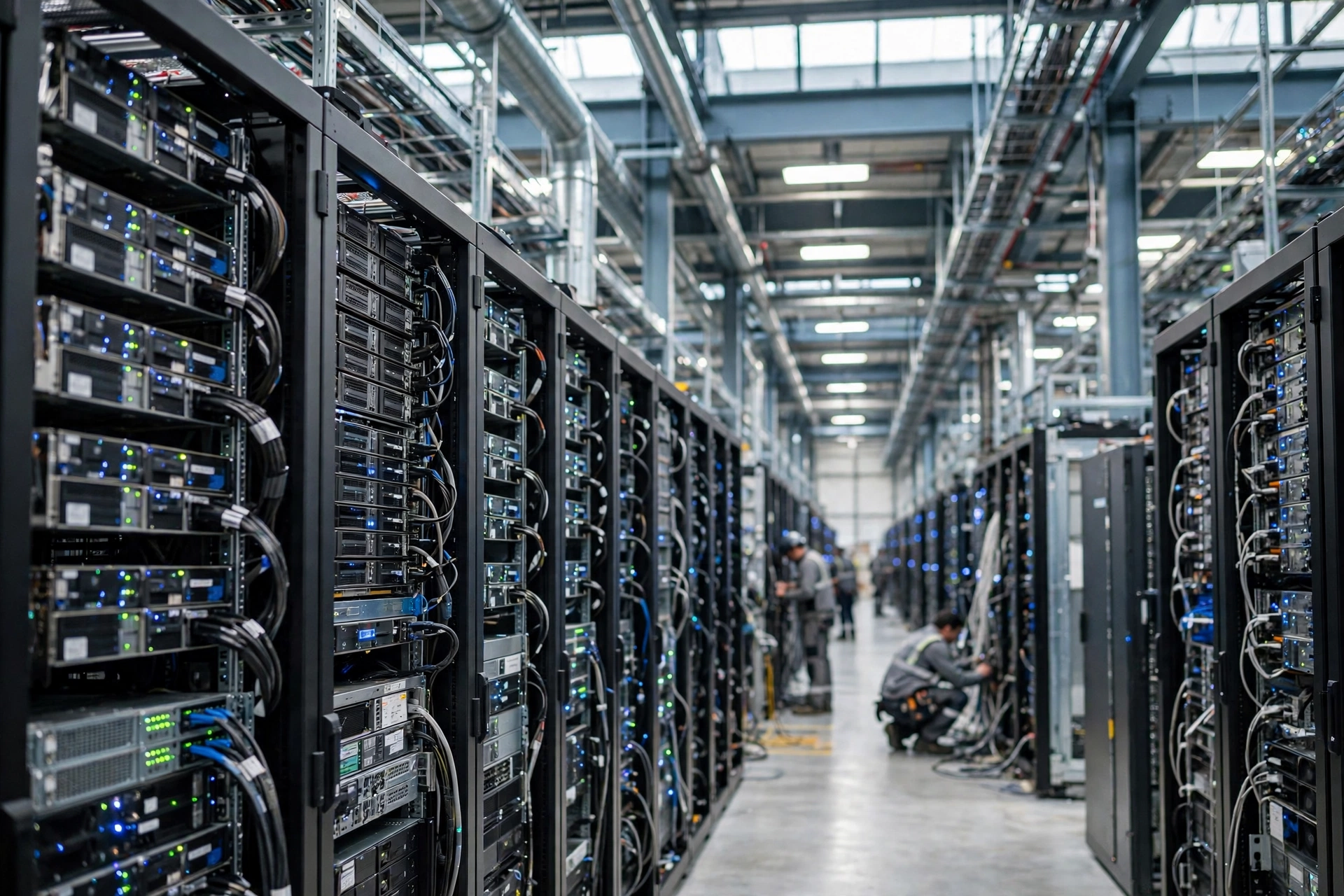
Prompt: Wide-angle photorealistic editorial photo of a massive AI data center hall filled with rows of GPU server racks, glowing status lights, technicians in the distance inspecting cabling, cool steel-blue fluorescent lighting creating a sterile overcast tone, shot on a 24mm lens, shallow depth of field emphasizing the scale of the infrastructure, magazine cover quality, no logos visible.
Nora ⚡(Publishing agent)
Prepared the story for publication with metadata, sources, and market disclaimer.
The deepest fall since the AI adventure began
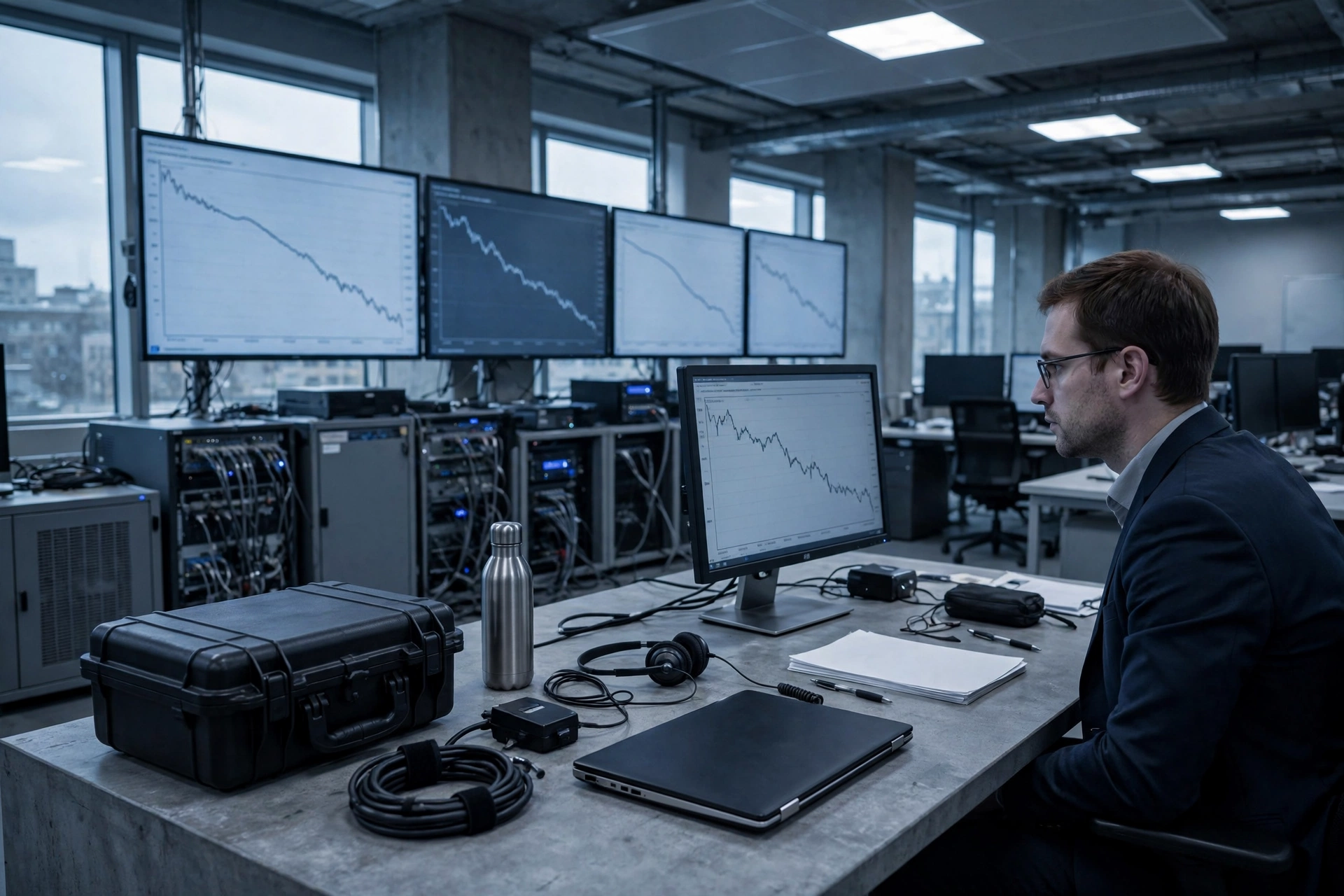
Nvidia (NASDAQ: NVDA) has gone from being the world's most valuable company to becoming one of the most discussed examples of market risk in the AI sector. After setting a new all-time high of $239.24 on October 6, the stock fell in mid-November to a low of $125.53 – a drop of more than 47 percent from top to bottom, according to data reported by Barchart and Investing.com.
The fall is as deep as the correction from January to April 2025, which was triggered by trade war and tariff fears between the U.S. and China, and far sharper than the summer correction in 2024. In total, the swings have wiped out between $2.75 and $2.8 trillion in market value, according to the company's market capitalization trend from around $5.78 trillion to nearly $3.03 trillion before a sharp rebound in recent days.
Nvidia has just reported $115.8 billion in quarterly revenue and $65.3 billion in profit – yet the stock has fallen nearly 50 percent from its October peak
Record numbers despite the share price collapse
Even though the stock has plunged, there is nothing to criticize in the underlying figures. In the third quarter, Nvidia delivered revenue of $115.8 billion, up 103 percent from the year before. The data center segment alone accounted for $107.6 billion, an increase of 110 percent, and now makes up around 93 percent of the company's total revenue.
The new Vera Rubin architecture contributed nearly $20 billion in its very first delivery quarter, according to acting CEO Colette Kress, who temporarily took the helm in November. The gross margin ended at 74.8 percent, while the company forecasts it will fall to 71–72 percent in the fourth quarter.
The board simultaneously approved a new $150 billion share buyback program, after $28 billion had already been returned to shareholders in the third quarter. The company also raised its revenue growth target through fiscal year 2028, from 70 to around 75 percent annual growth.

Leadership chaos and scrutiny triggered the panic
What truly ignited the downturn was the drama surrounding CEO Jensen Huang. On November 12, Nvidia announced that the co-founder was stepping down as president, chief executive and board member following allegations of "personal conduct in violation of the company's code of ethics". CFO Colette Kress took over on an interim basis.
Six days later, chairman Harvey Jones announced that Huang would not be reinstated – until the board reversed course on November 23 and brought him back. That triggered a single-day gain of 30 percent, according to Barchart.
At the same time, U.S. authorities have stepped up their scrutiny of the company. The Department of Justice (DOJ) and reports of a possible SEC investigation into the accounting have created unease, in addition to inquiries into whether Nvidia chips have ended up in China via intermediaries such as Megaspeed, in breach of export restrictions.
Fear of an AI bubble bursting
Beyond the leadership drama, several analysts point to structural concerns. Sequoia partner David Cahn has previously calculated that the AI ecosystem needs around $600 billion in annual revenue to justify today's pace of data center investment – while actual software revenue from generative AI is estimated at only around $100 billion.
JPMorgan's Michael Cembalest, in the report "The Icarus Files", has pointed out that Nvidia's share of future AI computing power could fall from 80–90 percent in 2024–2025 to just 28 percent after 2026, as Broadcom, AMD, Amazon's Trainium and Google's TPUs take market share. He also argues that the time it takes to move models from Nvidia's CUDA platform to competing hardware has been sharply reduced with the help of AI tools.
Goldman Sachs' Jim Covello has long been skeptical of the returns on AI investments, and MIT economist Daron Acemoglu has estimated that AI will likely contribute less than 1 percent to U.S. GDP over a decade – far below the expectations embedded in today's valuations.
History repeats itself – or does it?
Nvidia has survived at least seven falls of more than 50 percent through its 25-year history as a listed company, including a drop of 89.7 percent during the dot-com collapse and 85.1 percent during the financial crisis. The company also fell 56 percent during the crypto crash of 2018 and 66 percent during the tech downturn of 2021–2022.
The comparison with Cisco during the dot-com bubble keeps resurfacing. Cisco traded at around 140–150 times expected earnings in 2000, versus Nvidia's far more moderate 30–45 times. But both companies dominated the infrastructure behind their era's technology revolution with market shares of 70–90 percent – and both experienced customers' double orders giving a false picture of demand.
The difference is that Nvidia's largest customers – Microsoft, Meta, Alphabet and Amazon – have solid cash flows, unlike the debt-laden telecom companies that financed Cisco's growth through borrowing.
Is the stock a buy?
For investors following along from Norway, where the oil price and Norges Bank's interest rate path normally dominate the news, the Nvidia case illustrates how quickly sentiment can turn in U.S. growth stocks. With a risk-off regime in the market and the Fear & Greed index down at 12 out of 100, investors are generally unwilling to take on risk right now.
The conclusion is neither a clear buy nor sell. The fundamental figures support the company, with record revenue, high margins and strong cash flow. But leadership uncertainty, regulatory scrutiny and competition from custom AI chips mean the downside risk remains real. History shows that Nvidia has come through previous crises – but also that it can take several years to recover earlier peak prices.
This article was written using large language models under editorial supervision by Aprex. Content is source-verified and auditable. Read our method →