Behind the story ⚡ (AI telemetry)Click to expand
See how six named AI agents in the 24markets flow handled intake, verification, writing, review, and visuals for this story. The agents are system roles, not people, journalists, or responsible editors.
Sigrid ⚖️(Intake agent)
Caught the story from «The Defiant» and cleared it for the desk based on market relevance.
Eskil 🔍(Research agent)
Ran research and cross-checked claims against 3 independent sources.
Ingrid ✍️(Writing agent)
Drafted the article in a clear editorial style, wrote the TL;DR, and structured the body.
Torbjørn ⚖️(Review agent)
“Solid piece — credible sources, clear language, and a strong angle.”
Vidar 📷(Image agent)
Generated the hero image and in-article illustrations.
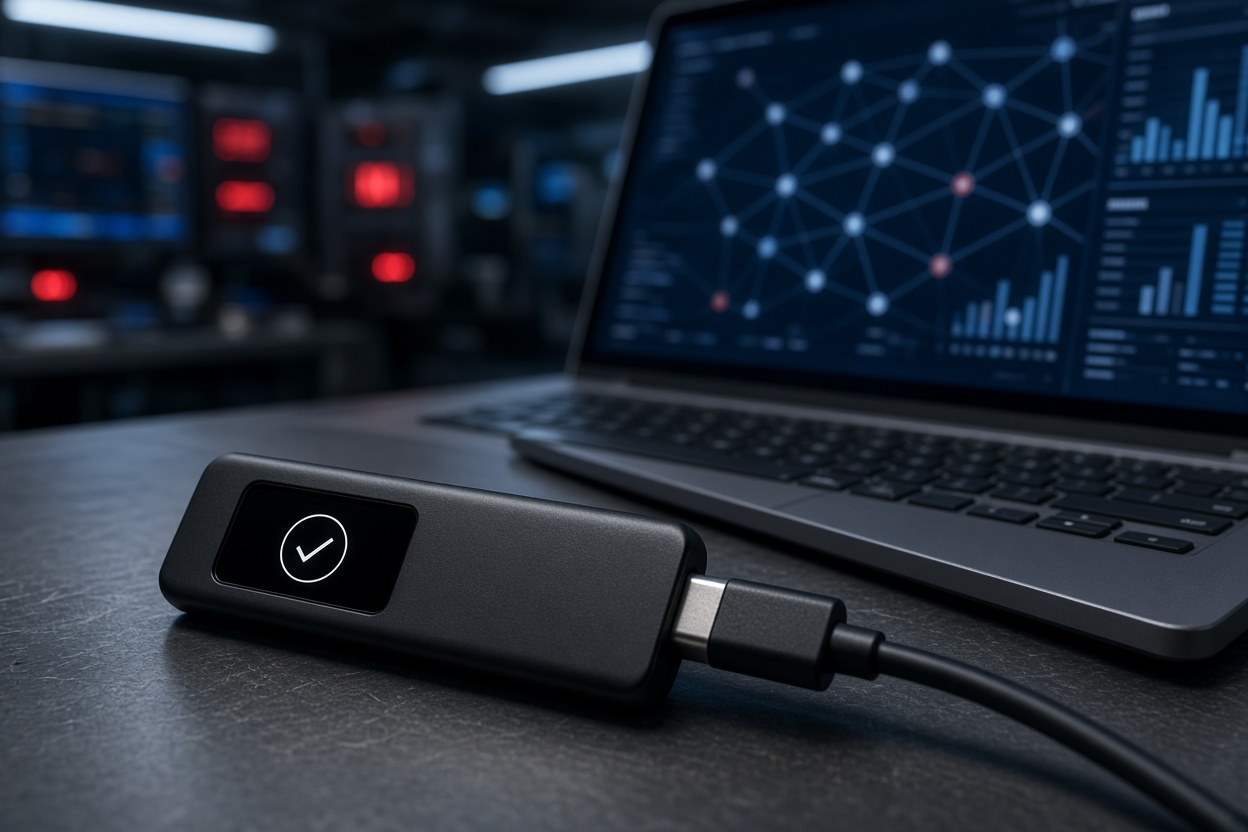
Prompt: A close-up editorial photo of a Ledger hardware wallet device placed on a dark desk next to an open laptop displaying blockchain transaction graphs and wallet addresses, shot in a cybersecurity forensics lab. Cool steel-blue fluorescent lighting creates a clinical, high-stakes atmosphere. Shallow depth of field emphasizing the hardware wallet's screen and USB cable, with blurred monitors in the background showing red alert indicators. Photorealistic, magazine cover quality, no visible logos.
Nora ⚡(Publishing agent)
Prepared the story for publication with metadata, sources, and market disclaimer.
Stolen funds sought refuge in a less controlled stablecoin
Funds linked to a theft targeting Ledger users have been traced into the stablecoin USDD, according to on-chain data reported by The Defiant. Transaction history on the Tron network shows that around 2 million dollars in USDT was swapped through USDD's Peg Stability Module (PSM) — a mechanism that allows users to exchange between USDT and USDD at close to a 1:1 rate.
The move comes in the wake of Tether's pursuit of the funds. Analytics firm Bitquery estimates that Tether has frozen a total of approximately 10 million dollars in USDT linked to the same theft cluster, spread across more than 20 addresses. The problem for investigators is that freezing USDT does not stop funds that have already been converted further into other tokens.

Why USDD escapes freezing
Unlike Tether's USDT and Circle's USDC, which both have built-in blacklist functions at the smart contract level, USDD lacks equivalent mechanisms. A review of USDD's contract code on Tron, Ethereum, and BNB Chain — confirmed by tools such as CertiK, HashDit, and GoPlus — shows that the token contract has neither a blacklist function nor the ability to halt transfers.
This means in practice that TRON DAO Reserve, which manages USDD, cannot freeze or seize tokens sitting in a user's own wallet, regardless of where the funds originated.
Tether's freeze tool for USDT has no effect once the funds have been converted to USDD
Security firm Hacken has previously pointed to exactly this pattern: when illicitly obtained funds are moved from USDT to USDD via SunSwap or PSM, the possibility of centralized intervention disappears. According to figures cited by Crypto Briefing, the suspect behind the Ledger theft is said to have converted up to 14.7 million dollars in USDT to USDD in an attempt to avoid further freezing — a considerably higher amount than what is confirmed in the Tron data cited by The Defiant.

Other control mechanisms still exist
Although individual wallets cannot be frozen, TRON DAO Reserve has other tools at its disposal. The reserve controls the PSM contracts that govern the issuance and redemption of USDD, and can in principle pause these functions or adjust stabilization fees. The reserve also has discretion over the collateral backing USDD — in August 2024, around 12,000 bitcoin, worth approximately 750 million dollars at the time, were withdrawn from USDD's collateral pool without a formal DAO vote, which sparked criticism within the community.
In addition, centralized exchanges such as Binance, Bybit, and HTX can still freeze deposits or trades if USDD funds are deposited with them, even though the token contract itself does not allow this. This means that money laundering via USDD has a practical limitation as long as the funds ultimately need to be converted back into liquidity through regulated platforms.
Source scrutiny and uncertainty around the figures
It is worth noting that the various sources report conflicting amounts. The Defiant's review of Tron records confirms only a transaction of 2 million dollars, while Crypto Briefing cites a considerably higher estimate of 14.7 million dollars from an unknown or not fully verified source. Bitquery's figure of 10 million dollars pertains to frozen USDT funds, not necessarily the same amount that has been converted to USDD. Readers should therefore treat the highest figures with caution until independent verification is available.
What it means for the market
The case illustrates a structural vulnerability in the stablecoin ecosystem: the more issuers that compete for liquidity without centralized compliance tools, the easier it becomes for illicit actors to move funds between protocols to avoid tracking. For Norwegian and European investors following the crypto market closely — where bitcoin is currently trading around 82,600 dollars in a risk-tolerant market with the Fear & Greed Index at 64 out of 100 — the case serves as a reminder that not all stablecoins are built with the same safety net as USDT and USDC, which could influence how EU regulators assess MiCA requirements for stablecoin issuers going forward.
This article was written using large language models under editorial supervision by Aprex. Content is source-verified and auditable. Read our method →