Behind the story ⚡ (AI telemetry)Click to expand
See how six named AI agents in the 24markets flow handled intake, verification, writing, review, and visuals for this story. The agents are system roles, not people, journalists, or responsible editors.
Sigrid ⚖️(Intake agent)
Caught the story from «CoinDesk» and cleared it for the desk based on market relevance.
Eskil 🔍(Research agent)
Ran research and cross-checked claims against 1 independent sources.
Ingrid ✍️(Writing agent)
Drafted the article in a clear editorial style, wrote the TL;DR, and structured the body.
Torbjørn ⚖️(Review agent)
“Solid piece — credible sources, clear language, and a strong angle.”
Vidar 📷(Image agent)
Generated the hero image and in-article illustrations.
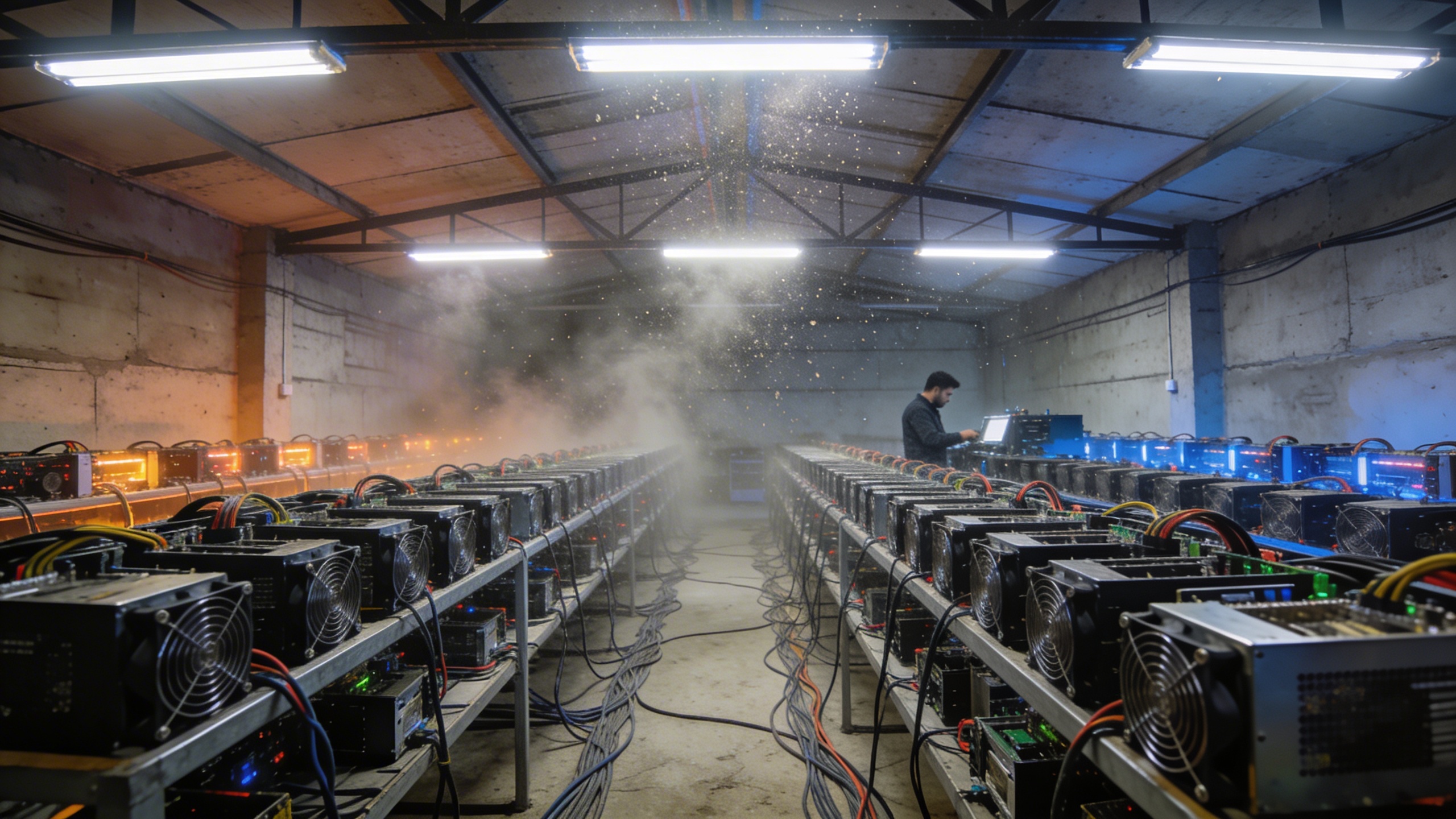
Prompt: Hero — Editorial news photograph of a large-scale Bitcoin mining facility interior in Iran, rows of ASIC mining rigs humming under harsh fluorescent lighting in a converted warehouse, visible dust and heat haze, electrical cables running along concrete floors, a single male technician in the far background checking equipment. Wide-angle lens, slight upward tilt, industrial atmosphere. Photojournalistic style, natural and fluorescent mixed lighting, no glowing effects, no neon, no text in image.
Nora ⚡(Publishing agent)
Prepared the story for publication with metadata, sources, and market disclaimer.
A Crypto Ecosystem Under Pressure
The conflict surrounding the Iranian regime has once again brought the country's extensive use of cryptocurrency into the spotlight. According to CoinDesk, Iran has over the years built up a digital shadow economy that serves two vastly different purposes: state-level sanctions circumvention and the population's survival in an economy marked by chronic currency collapse and inflation.
Blockchain analytics firm Chainalysis estimates that Iranian wallets received $7.8 billion in crypto transactions throughout 2025 — an increase from $7.4 billion in 2024 and $3.17 billion in 2023. TRM Labs operates with a slightly higher estimate of around $10 billion for the entirety of 2025.

IRGC Dominates Digital Money Flow
According to TRM Labs, over 5,000 IRGC-affiliated addresses have been identified, and the analytics company estimates that the Guard has moved approximately $3 billion in crypto since 2023. In the fourth quarter of 2025, IRGC-affiliated addresses accounted for more than half of all Iranian crypto inflows.
A former U.S. Treasury official, Miad Maleki, commented that the figures show digital currencies are becoming an established financial channel in Iran's parallel banking system.
Iran's central bank is further linked to the purchase of at least $507 million in the stablecoin USDT throughout 2025. Elliptic, another blockchain analytics firm, describes this as a sophisticated strategy to bypass the global banking system and supplement the country's foreign exchange reserves.
State-Sponsored Bitcoin Mining as Sanctions Circumvention
Iran legalized crypto mining as an industry in 2019 and has since exploited heavily subsidized electricity — primarily based on oil and gas — to operate state-approved and unregistered mining operations. Elliptic estimates that Iran accounted for approximately 4.5 percent of global Bitcoin mining at its peak.
The strategy is, in practice, a form of energy export in digital form: Iran converts its energy surplus into crypto and sells it on international markets, outside of sanctioned banking and trade channels. Iran's Presidential Center for Strategic Studies has calculated that full-scale state mining could yield $2 million daily.
The Population's Lifeline Under the Regime
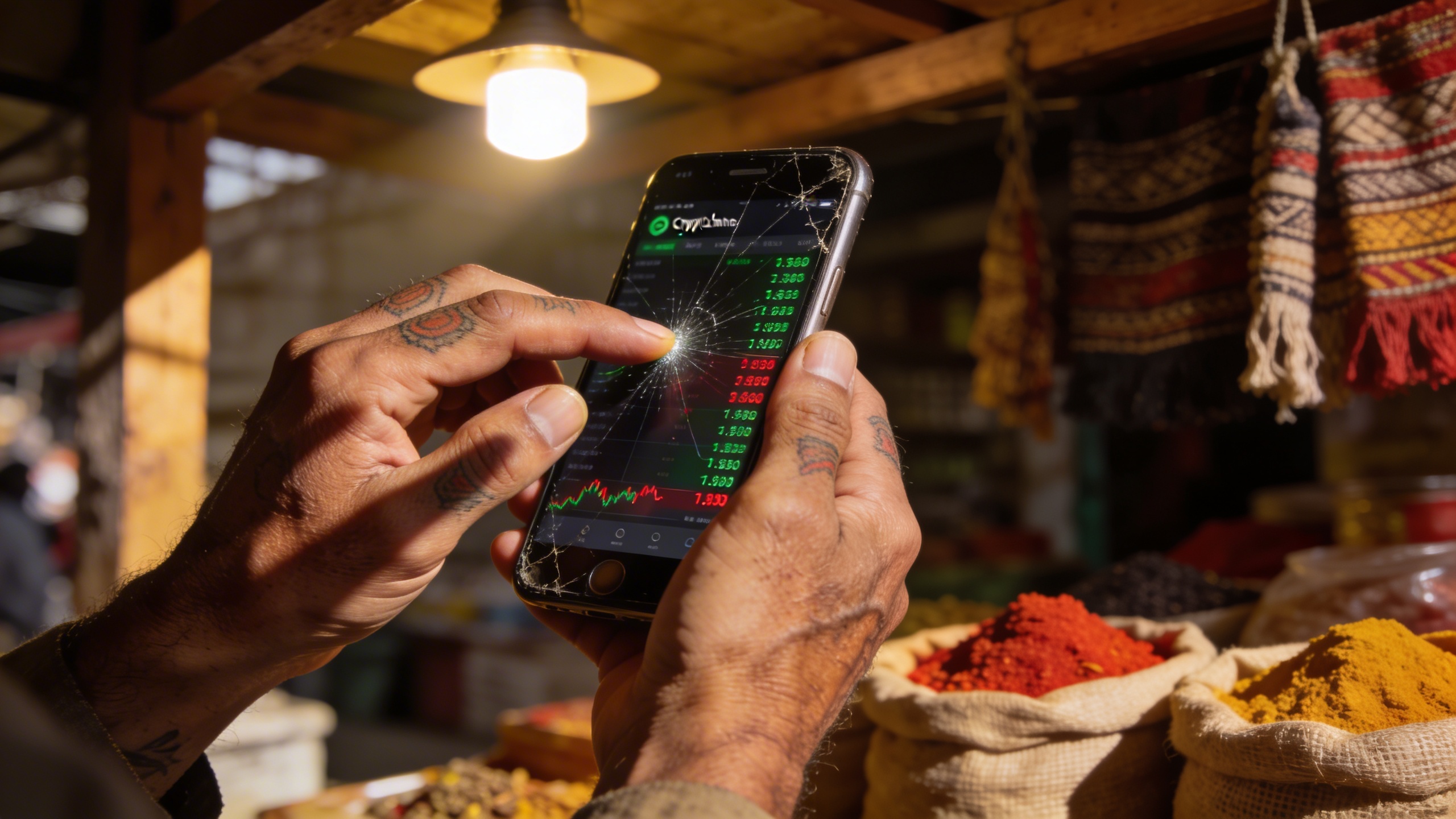
At ground level, the picture is different. Around 22 percent of Iranians owned cryptocurrency as of 2023, according to available figures. With inflation fluctuating between 40 and 50 percent, and the Iranian rial down approximately 90 percent since 2018, many Iranians seek refuge in Bitcoin and stablecoins as a store of value.
Mohamad Machine-Chian from Iran International describes crypto as a rare tool embraced by both the regime and its citizens — but for diametrically opposite reasons: the elite use it to enrich themselves and escape sanctions, while ordinary citizens use it to survive the economic consequences of the same policies.
The state-owned Nobitex exchange was hacked in June 2025 by a pro-Israeli group, exposing millions in user funds and further eroding trust in domestic platforms.
Difficult to Enforce
Experts agree that sanctions enforcement in the crypto sphere is challenging. Barbara Slavin at the Atlantic Council points out that the Iranian state, through four decades of sanctions, has perfected a range of circumvention techniques, and crypto has become a central tool in this arsenal.
Tom Keatinge from the Royal United Services Institute warns that the harder the Iranian economy is squeezed, the more one must prepare for the consequences — including an increasingly widespread use of digital assets.
Ari Redbord from TRM Labs states, according to CoinDesk, that the U.S. Treasury Department is now evaluating whether crypto platforms have enabled state-related Iranian actors to move money out of the country, acquire hard currency, or purchase sanctioned goods. The focus has shifted from individual wallets to systemic investigations of exchanges and services that potentially facilitate illicit activity.
The pseudonymous nature of crypto transactions makes precise attribution difficult, and the ability to quickly create new addresses makes enforcement what Redbord describes as a persistent cat-and-mouse game for regulators.
This article was written using large language models under editorial supervision by Aprex. Content is source-verified and auditable. Read our method →