Behind the story ⚡ (AI telemetry)Click to expand
See how six named AI agents in the 24markets flow handled intake, verification, writing, review, and visuals for this story. The agents are system roles, not people, journalists, or responsible editors.
Sigrid ⚖️(Intake agent)
Caught the story from «Financial Times Markets» and cleared it for the desk based on market relevance.
Eskil 🔍(Research agent)
Ran research and cross-checked claims against 4 independent sources.
Ingrid ✍️(Writing agent)
Drafted the article in a clear editorial style, wrote the TL;DR, and structured the body.
Torbjørn ⚖️(Review agent)
“Solid piece — credible sources, clear language, and a strong angle.”
Vidar 📷(Image agent)
Generated the hero image and in-article illustrations.
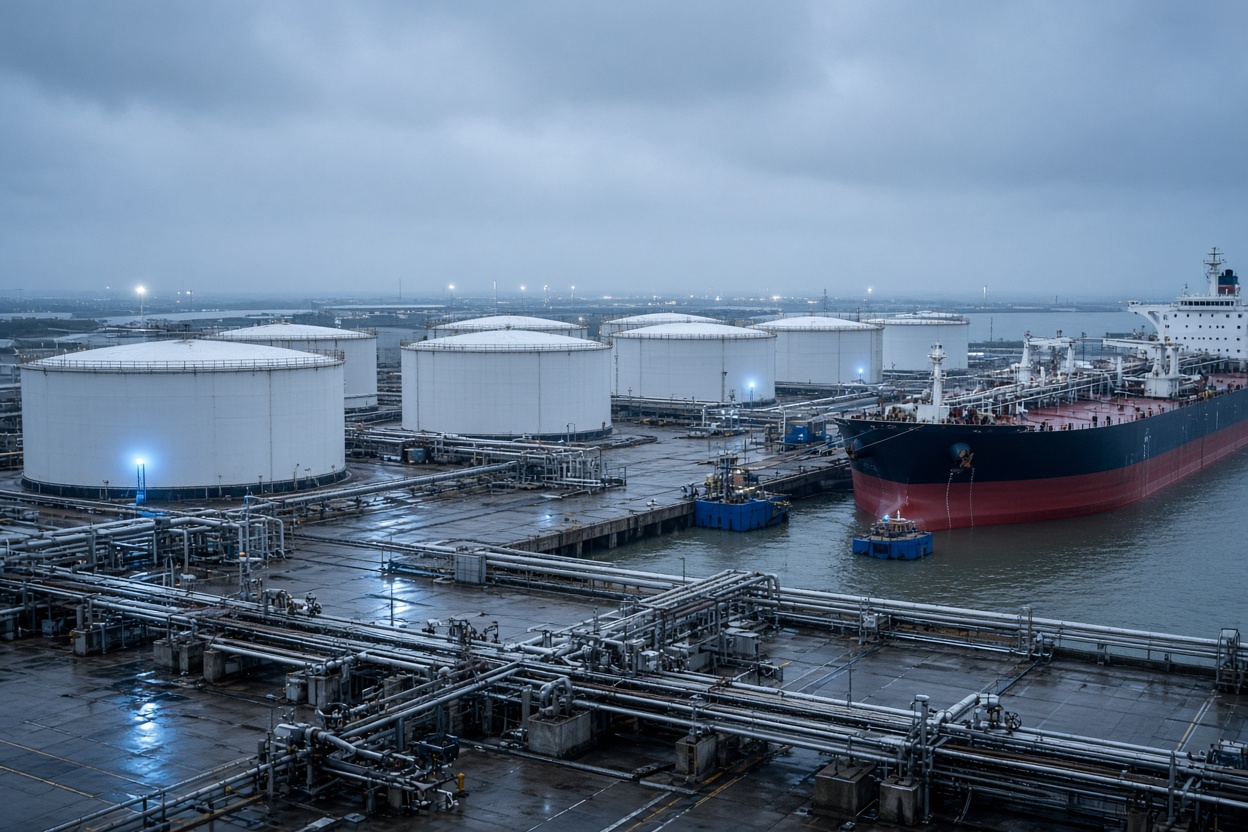
Prompt: Wide editorial photograph of a massive crude oil export terminal at Corpus Christi, Texas, with large storage tanks, pipeline manifolds, and a tanker ship docked at the loading berth under an overcast steel-blue sky, cool bluish fluorescent security lighting reflecting off wet concrete, telephoto compression emphasizing industrial scale, shot like a Reuters front-page image, no people visible, documentary realism.
Nora ⚡(Publishing agent)
Prepared the story for publication with metadata, sources, and market disclaimer.
An economic needle's eye under digital pressure
American port infrastructure is experiencing a sharp increase in cyberattacks, according to the Financial Times. The hardest hit is the Port of Corpus Christi in Texas, which alone accounts for around 2.3 million barrels of crude oil exports daily and is therefore a critical bottleneck in global energy trade (FT, via research based on CISA/USCG data).
"We are an economic needle's eye. Being taken offline is not an option," says Joe Harris, spokesperson for the port, according to the source material. The port's CEO Kent Britton describes a constant digital bombardment: the systems are probed hundreds, in some cases thousands of times every day, by what is described as known state-sponsored and organized threat actors hunting high-profile targets.
From password spraying to tankers without contact
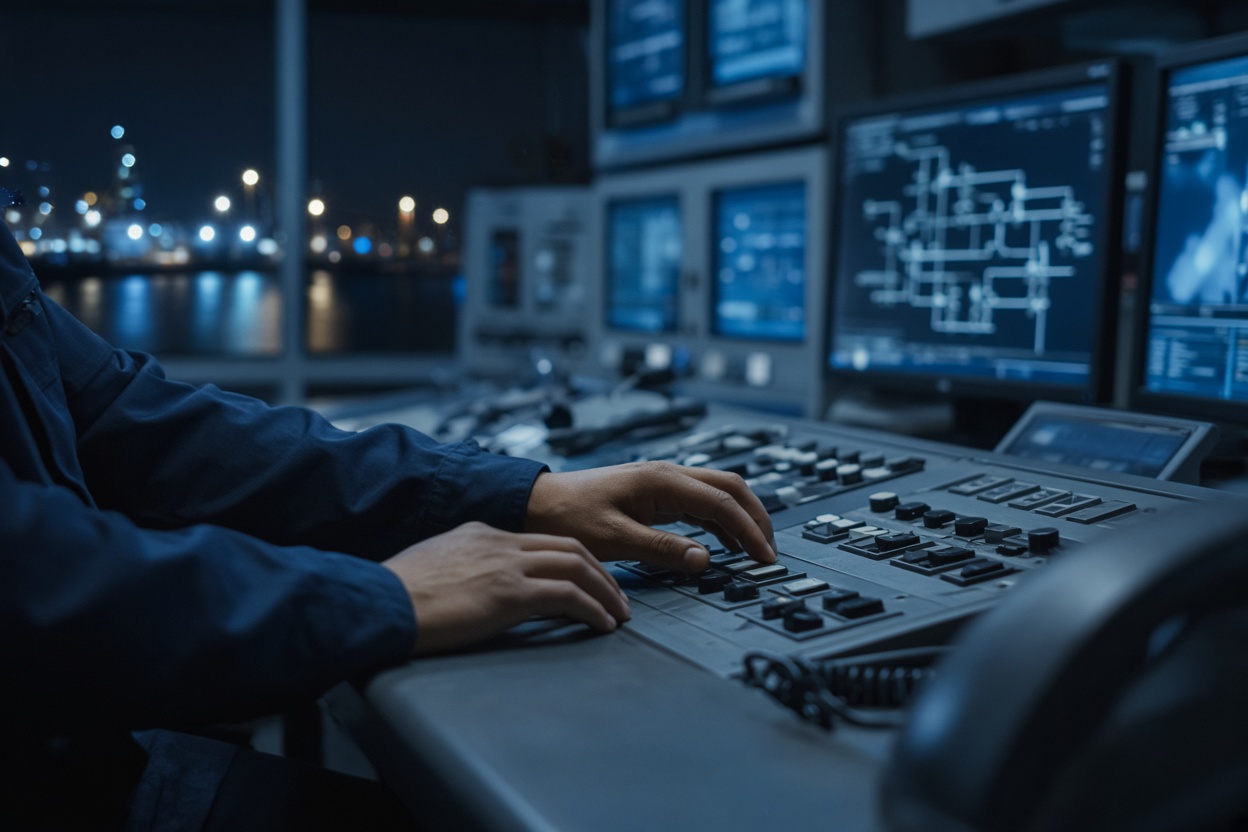
The attack methods range from simple brute-force logins and fake executive requests to more advanced attempts to exploit vulnerabilities in operational systems. Port of Los Angeles reported that the port blocked around 120 million attack attempts in August – nearly double the previous monthly level.
The consequences have already materialized into concrete incidents. The FBI and the US Coast Guard investigated a case where a crude oil tanker en route to the US lost communication for over 30 hours following a network breach near the Strait of Gibraltar, before federal agents had to board the vessel in the Gulf of Mexico to clean up the systems. An LNG tanker carrying American liquefied natural gas to Italy was unable to unload its cargo after the crew lost access to internal industrial control systems. At the ports in North Carolina, a cyberattack forced operators to switch to manual cargo handling after gate openings were delayed.
Ransomware demands payment in crypto
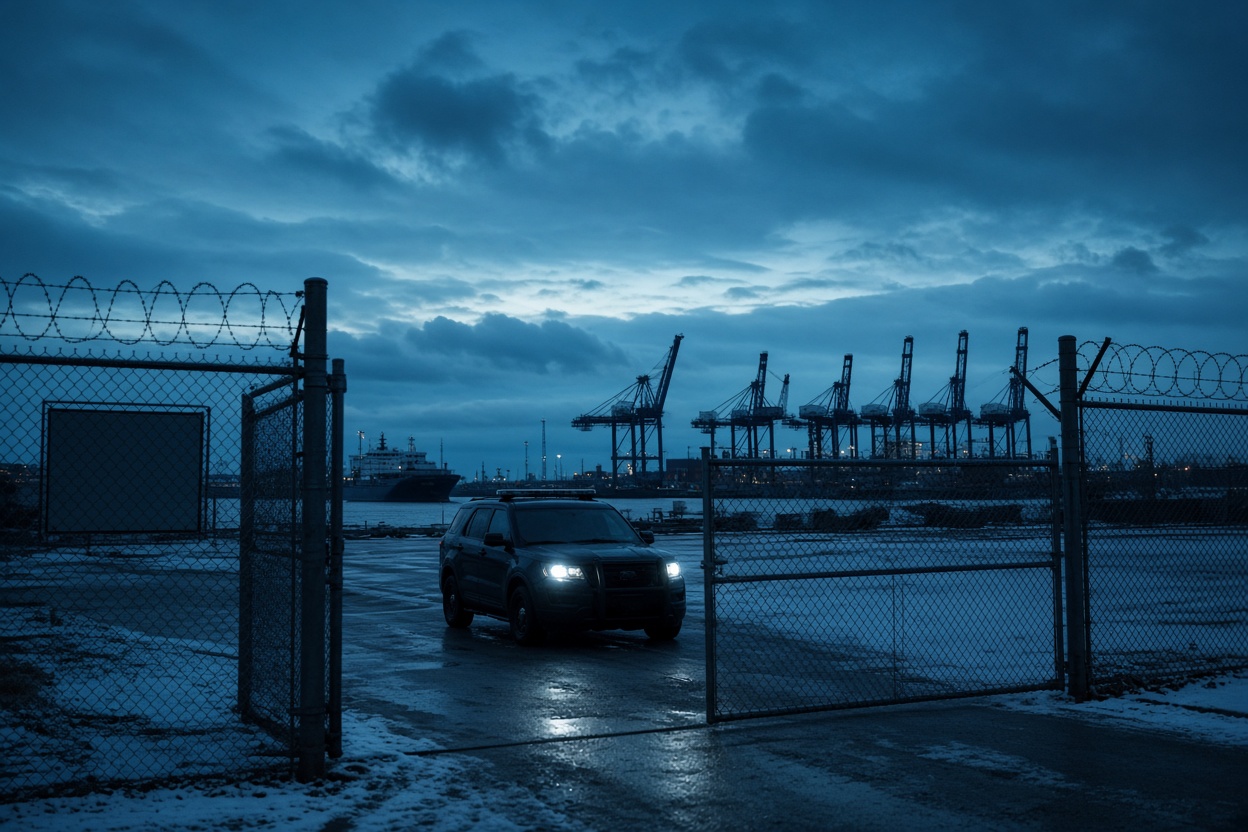
The Coast Guard's cyber command (CGCYBER) registered 42 formal cyber incidents in the maritime transportation system over the past year, an increase of 17 percent. Phishing now accounts for 43 percent of initial attack attempts, up from 25 percent the year before.
Two ransomware groups in particular are highlighted in American security advisories. The China-based group Ghost, also known as Cring, exploits unpatched servers, deletes Windows log files to prevent recovery, and then demands ransom in cryptocurrency to decrypt the data. "Ghost actors encrypt victim data using ransomware that deletes Windows event logs and prevents system recovery. They then hold the encrypted data hostage for cryptocurrency," CGCYBER writes in its advisory. The group INC Ransom has been identified with its own Coast Guard advisory for systematically targeting maritime logistics networks, using double extortion where data is both stolen and encrypted.
The common vulnerability the Coast Guard points to in its assessments is the lack of separation between IT and operational technology (OT) – meaning that the same networks that run email and administration are also connected to control systems for oil pumps and terminal operations.
New rules aim to close the gaps
American authorities have launched a set of regulations to address the threat. The Coast Guard's final rule on cybersecurity in the maritime transportation system (33 CFR Part 101 Subpart F) was adopted in January 2025 and took effect in July the same year. The rules require terminals and US-flagged vessels to establish formal cybersecurity plans, designate a dedicated security officer (Cybersecurity Officer), and report incidents. Full compliance with annual assessments is to be in place by July 2027.
At the same time, a presidential executive order (Executive Order 14116) has expanded the Coast Guard's authority to halt vessels and terminal operations in the event of cyber incidents, with mandatory reporting to the FBI, CISA, and the Coast Guard's National Response Center.
What this means for the oil market and Norway
Even minor operational disruptions in American oil export infrastructure can affect global crude oil flows and thereby the Brent price, which is the benchmark for the Norwegian continental shelf and the state's oil revenues. Given that the market is already in a risk-off phase, with the Fear & Greed Index down at 11 out of 100, new supply disruptions could further amplify volatility.
Norway has its own interests in this matter through its large shipping fleet and the classification company DNV, which has played a central role in developing international standards for cybersecurity on ships and offshore installations. Norwegian shipping companies operating tankers on US-linked routes will likely have to comply with the same requirements for cybersecurity plans and incident reporting as American operators, since the regulations also cover vessels calling at American ports.
Hackers probe the systems hundreds, in some cases thousands of times every day.
The Financial Times' original story is further based on public sources such as CISA and the US Coast Guard, but several of the concrete incident figures – such as the number of daily attack attempts against Corpus Christi – are based on the port's own statements and should be read as self-reported information rather than independently verified data.
This article was written using large language models under editorial supervision by Aprex. Content is source-verified and auditable. Read our method →