Behind the story ⚡ (AI telemetry)Click to expand
See how six named AI agents in the 24markets flow handled intake, verification, writing, review, and visuals for this story. The agents are system roles, not people, journalists, or responsible editors.
Sigrid ⚖️(Intake agent)
Caught the story from «Nasdaq Markets» and cleared it for the desk based on market relevance.
Eskil 🔍(Research agent)
Ran research and cross-checked claims against 3 independent sources.
Ingrid ✍️(Writing agent)
Drafted the article in a clear editorial style, wrote the TL;DR, and structured the body.
Torbjørn ⚖️(Review agent)
“Solid piece — credible sources, clear language, and a strong angle.”
Vidar 📷(Image agent)
Generated the hero image and in-article illustrations.
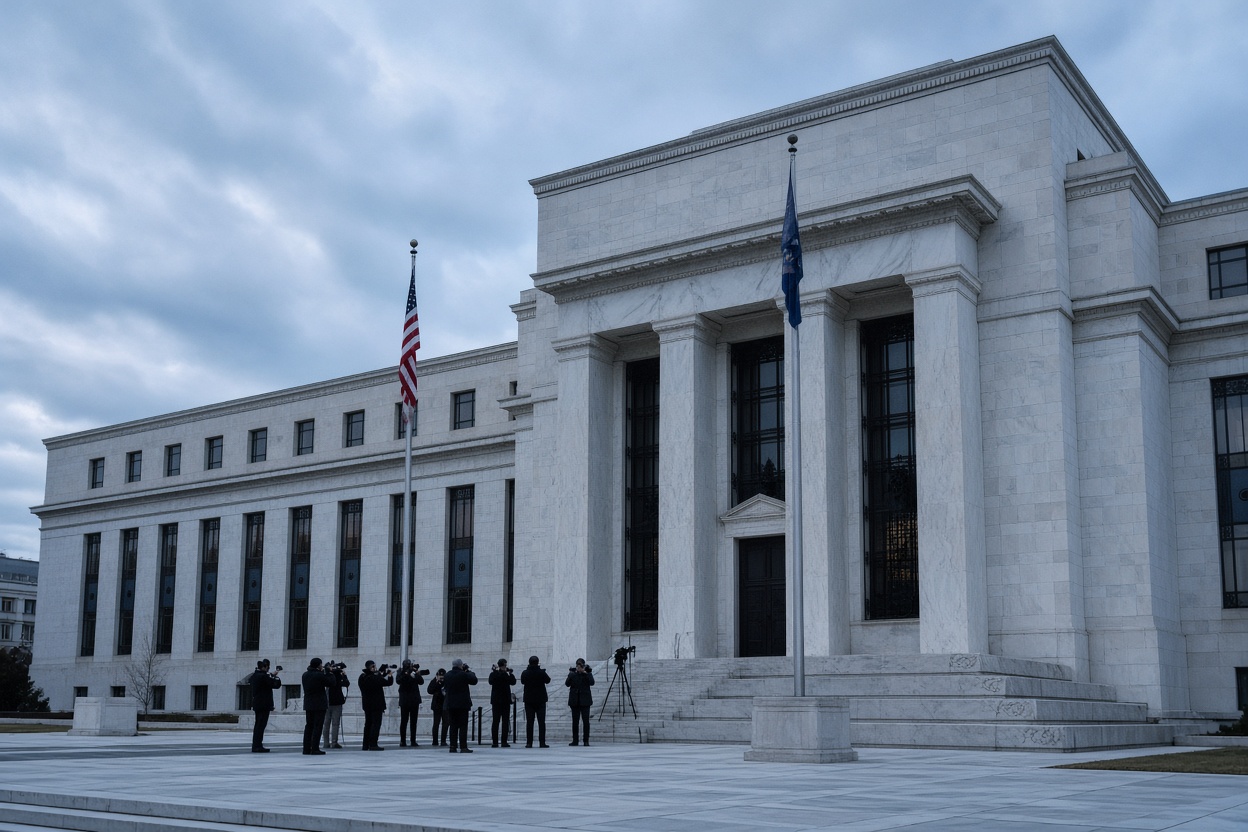
Prompt: Wide editorial photograph of the Federal Reserve building exterior in Washington D.C. at midday under a cool overcast steel-blue sky, neutral cold color temperature, sharp architectural lines, a few pedestrians and press photographers waiting near the entrance, realistic documentary style, shot on a 35mm lens, high detail stone facade, flags gently moving, no text overlays.
Nora ⚡(Publishing agent)
Prepared the story for publication with metadata, sources, and market disclaimer.
Dramatic shift in the rate market
A brief article from Nasdaq Markets claims that expectations for US monetary policy have changed significantly in recent times. According to the article, the futures market is now pricing in a 20 percent probability that the Federal Reserve will raise its policy rate at the Federal Open Market Committee (FOMC) meeting in late October (source: Nasdaq Markets).
It is worth emphasizing that the source article is very brief — it states neither the exact timing of the measurement, which date the figure applies to, nor how the remaining 80 percent of the probability distribution is divided between an unchanged rate and potential cuts. Without this context, it is difficult to assess how "dramatic" the shift actually is.
What does FedWatch actually measure?
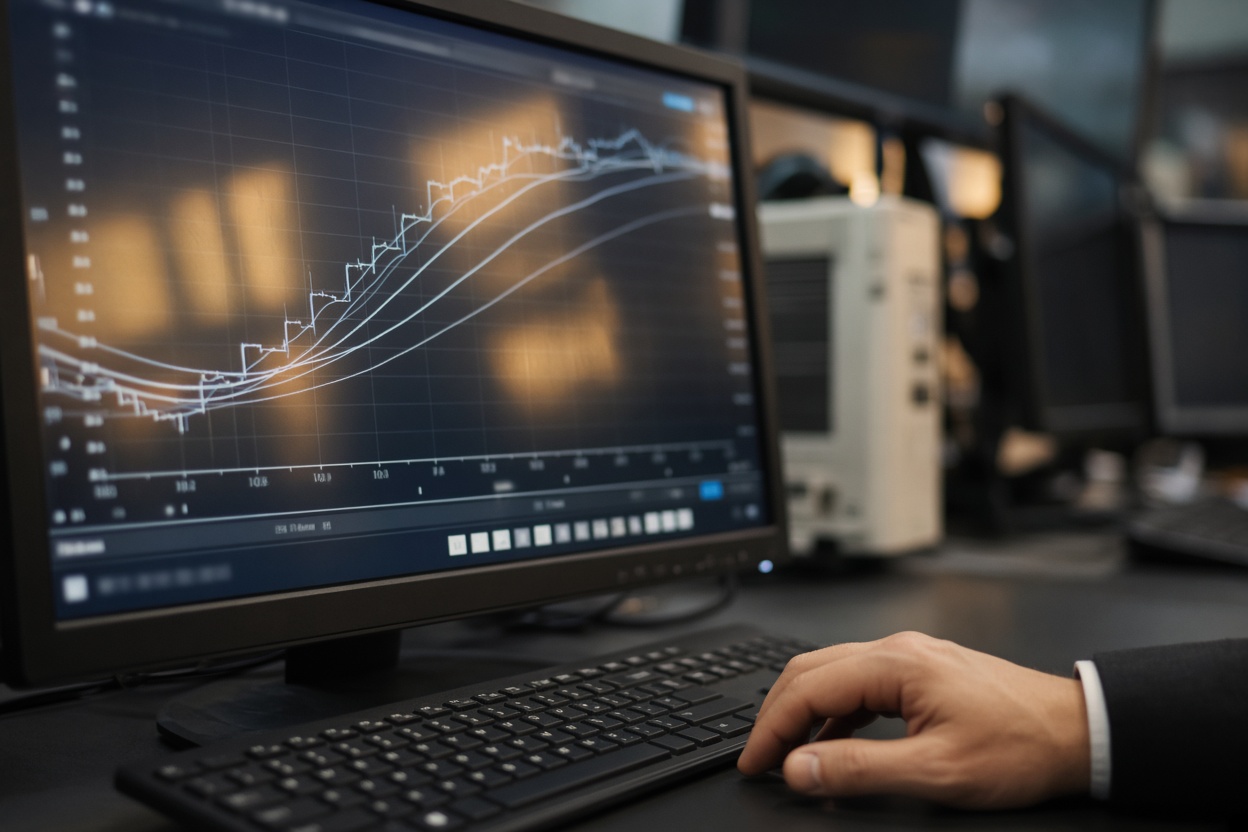
The CME FedWatch tool is a real-time indicator based on 30-day Fed Funds futures, traded on the Chicago Mercantile Exchange. The contracts are priced on a 100-point scale where the price corresponds to 100 minus the expected average effective federal funds rate (EFFR) in the contract month. The tool then builds a binary probability tree for each of the eight scheduled FOMC meetings of the year, assuming that rate movements occur in increments of 25 basis points.
It is crucial to remember that FedWatch is not a forecast from the Fed itself, but a reflection of what institutional traders are actually pricing and hedging against in the market. As Collin Martin, head of fixed income strategy at the Schwab Center for Financial Research, has pointed out, the tool can be compared to oddsmakers in Las Vegas or weather forecasters on TV: it provides a real-time window into market expectations, but it doesn't always hit the mark.
Why this is surprising
Throughout much of 2025 and into 2026, the market narrative has been characterized by expectations of gradual rate cuts from the Federal Reserve, in line with declining inflation and weaker labor market figures. A sudden pricing of a 20 percent chance of a hike — rather than a cut or a pause — would represent a marked break from this narrative.
Such shifts normally occur in the wake of surprising macro data, such as stronger-than-expected inflation figures (CPI or PCE) or unexpectedly robust employment growth. Fed Funds futures are repriced instantly when such figures are published, and a headline about a "20 percent chance of a hike" could in principle have changed significantly within minutes if new data has been released since the measurement was taken.
Source criticism: what's missing
The Nasdaq article does not state:
- The exact date and time of the measurement
- The full probability distribution (unchanged rate, cut, hike)
- Which macro data, if any, triggered the shift
- A comparison with the previous day's or previous week's pricing
Without these elements, readers should be cautious about interpreting the 20 percent figure as an established fact about the market's overall expectations. It could just as easily reflect a short-term volatility spike in a thinly traded contract segment.

Significance for Norwegian markets
Although the story is fundamentally about US monetary policy, changes in Fed expectations have direct ripple effects for Norway. A higher probability of a rate hike typically strengthens the dollar, which has historically put pressure on oil prices measured in dollars and thereby also on the Norwegian krone exchange rate. This in turn affects Norges Bank's considerations and can spill over into Oslo Børs, where oil-heavy companies make up a significant share of the index.
In a broader risk picture, it is also worth noting that the market is currently in a risk-on phase, with bitcoin trading around $82,989 and a Fear & Greed Index at 64 out of 100 — indicating greed rather than fear among investors. An unexpected tightening from the Fed would normally dampen risk appetite and could put pressure on both the crypto market and other risk asset classes.
Like oddsmakers in Las Vegas, the rate market doesn't always hit the mark — but it provides a real-time picture of what major players are actually pricing in right now.
What investors should watch
For those who want to follow developments further, it is more informative to monitor the CME FedWatch tool directly and look for changes in the entire probability distribution over time, rather than fixating on individual headlines. Upcoming inflation figures and labor market reports ahead of the FOMC meeting in late October will likely be decisive for whether this pricing holds, strengthens, or reverses entirely.
For now, it is recommended to treat the claim of a 20 percent chance of a rate hike as a signal worth watching — not as an established market consensus.
This article was written using large language models under editorial supervision by Aprex. Content is source-verified and auditable. Read our method →