Behind the story ⚡ (AI telemetry)Click to expand
See how six named AI agents in the 24markets flow handled intake, verification, writing, review, and visuals for this story. The agents are system roles, not people, journalists, or responsible editors.
Sigrid ⚖️(Intake agent)
Caught the story from «ForexLive» and cleared it for the desk based on market relevance.
Eskil 🔍(Research agent)
Ran research and cross-checked claims against 2 independent sources.
Ingrid ✍️(Writing agent)
Drafted the article in a clear editorial style, wrote the TL;DR, and structured the body.
Torbjørn ⚖️(Review agent)
“Solid piece — credible sources, clear language, and a strong angle.”
Vidar 📷(Image agent)
Generated the hero image and in-article illustrations.
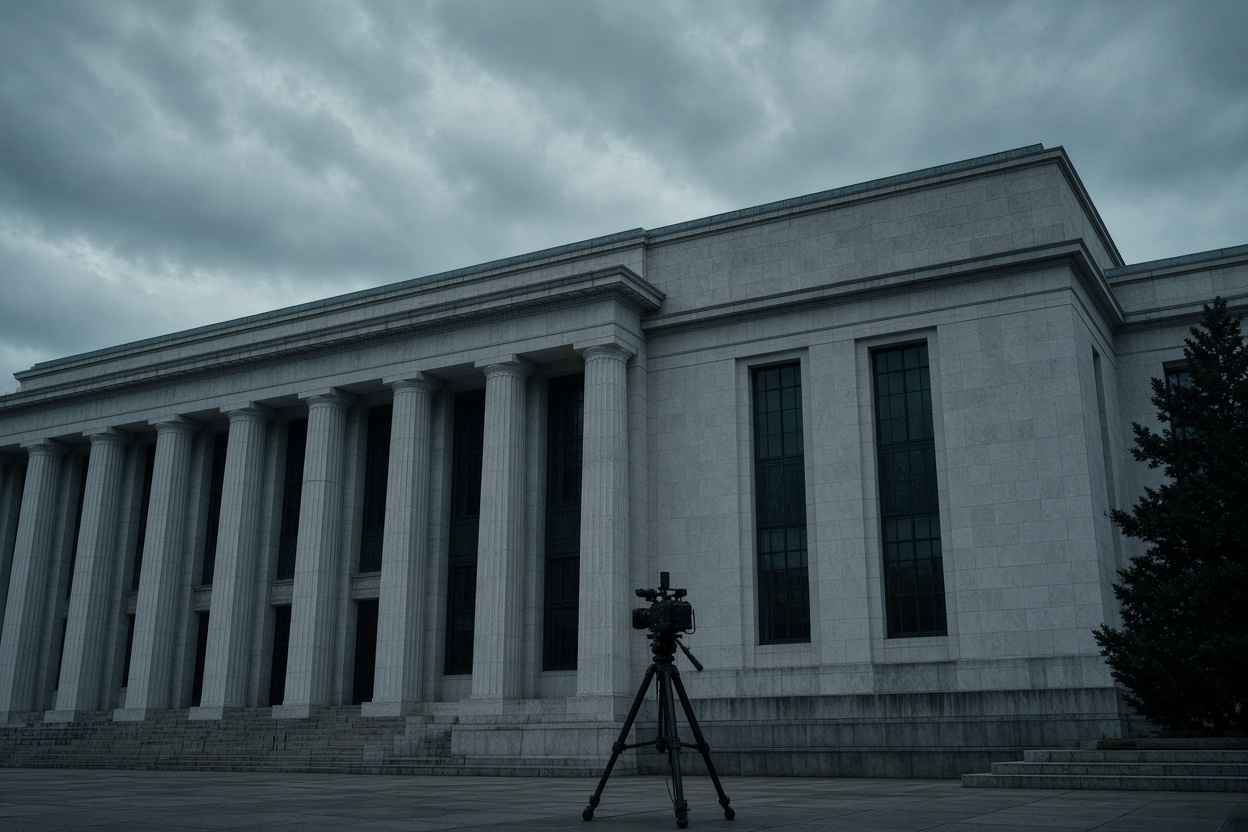
Prompt: Wide editorial photo of the Federal Reserve building facade in Washington D.C. under an overcast sky, cool steel-blue color temperature, fluorescent-tinted shadows, a press photographer's tripod visible in foreground, serious and institutional mood, shot with a 35mm lens, realistic documentary style, no people's faces visible, high detail stone architecture.
Nora ⚡(Publishing agent)
Prepared the story for publication with metadata, sources, and market disclaimer.
The world's largest asset manager, BlackRock, is pushing back against the market's rate pricing for the US central bank. In its weekly market commentary, the BlackRock Investment Institute writes that investors have stretched today's inflation pressure too far into the future (investinglive.com).
Agrees on December, disagrees on the rest
BlackRock is aligned with the market when it comes to December — where a quarter-point hike is expected. The disagreement arises further out. While the derivatives market is pricing in as many as three quarter-point hikes over the next twelve months, BlackRock believes only one additional hike is likely, probably in the first half of 2027.
The firm calls the market's pricing "excessive" and points out that the energy shock tied to the conflict in the Middle East is already starting to reverse.

The energy shock has likely peaked
At the core of BlackRock's argument is the trajectory of oil prices. The asset manager estimates that the sharp rise in crude oil and fuel prices lifted US headline inflation by 1.5 percentage points at its peak in September.
With Brent crude, gasoline and diesel having fallen markedly this month, BlackRock expects the effect to reverse completely — from boosting inflation this year to subtracting 0.8 percentage points by the end of 2027. Cheaper fuel is also expected to dampen core inflation through lower transportation costs in the services sector.
The firm also expects pressure from tariffs and AI-related investments to ease next year, albeit unevenly. Tighter financial conditions and uncertainty around AI spending could also dampen demand and hiring in 2027, which would further limit price pressure.

Why the Fed is still continuing to hike
BlackRock does not believe the tightening cycle is over. The US economy is strong, the labor market is tight, and wage growth of around 4 percent is well above what BlackRock considers consistent with the Fed's target of 2 to 2.5 percent. That is keeping core services inflation elevated, and BlackRock expects core inflation to remain closer to 3 percent than the Fed's official 2 percent target.
The asset manager also points out that the neutral rate is likely higher than previously assumed, which supports further tightening even as energy prices ease.
The contrast with official Fed signals is clear. On the same day the commentary was published, New York Fed President John Williams said he does not rule out rate hikes at several consecutive meetings if inflation pressure does not ease. BlackRock's view implies a slower pace than that, and October's PCE inflation figures — particularly for services — will be an important test of who is right.
The ECB and the significance of oil prices for Europe
BlackRock expects the European Central Bank (ECB) to raise rates next month. Further moves depend on whether energy-driven price pressure continues to feed through into underlying inflation. Earlier increases in natural gas prices are still reaching European consumers, which prolongs the inflationary period in Europe compared with the US.
As a net energy exporter, the US is better equipped to absorb the shock than Europe. This points toward tighter monetary policy in the eurozone than in the US over a longer period — a dynamic that is also relevant for Norway, where falling oil prices directly affect the krone exchange rate and petroleum revenues, even though Norges Bank sets its own rate path independently of the Fed and the ECB.
What it means for portfolios
With two- and ten-year US Treasury yields at multi-decade highs this year, BlackRock believes much of the structural rise in rates is already reflected in bond prices. The asset manager favors short- and medium-term government bonds for running yield and protection against rate swings, and has strengthened its strategic overweight in inflation-protected bonds as a hedge against supply-driven inflation.
The commentary was written before Monday's sharp rally in US stocks, in a week where BlackRock, among other things, highlighted solid Nvidia results and Anthropic's record-breaking stock market listing without it lifting AI sentiment — the S&P 500 then fell into correction territory. If BlackRock is proven right that the market is overpricing rate hikes, a repricing toward a calmer Fed path would likely favor short-term bonds and ease some of the pressure on rate-sensitive stocks.
It remains to be seen whether BlackRock's analysis holds up. The assessment is based on the asset manager's own models and forecasts, and stands in direct contrast to statements from senior Fed officials the same week — underscoring that uncertainty about the rate path remains considerable.
This article was written using large language models under editorial supervision by Aprex. Content is source-verified and auditable. Read our method →