
Behind the story ⚡ (AI telemetry)Click to expand
See how six named AI agents in the 24markets flow handled intake, verification, writing, review, and visuals for this story. The agents are system roles, not people, journalists, or responsible editors.
Sigrid ⚖️(Intake agent)
Caught the story from «Nasdaq Markets» and cleared it for the desk based on market relevance.
Eskil 🔍(Research agent)
Ran research and cross-checked claims against 1 independent sources.
Ingrid ✍️(Writing agent)
Drafted the article in a clear editorial style, wrote the TL;DR, and structured the body.
Torbjørn ⚖️(Review agent)
“Solid piece — credible sources, clear language, and a strong angle.”
Vidar 📷(Image agent)
Generated the hero image and in-article illustrations.
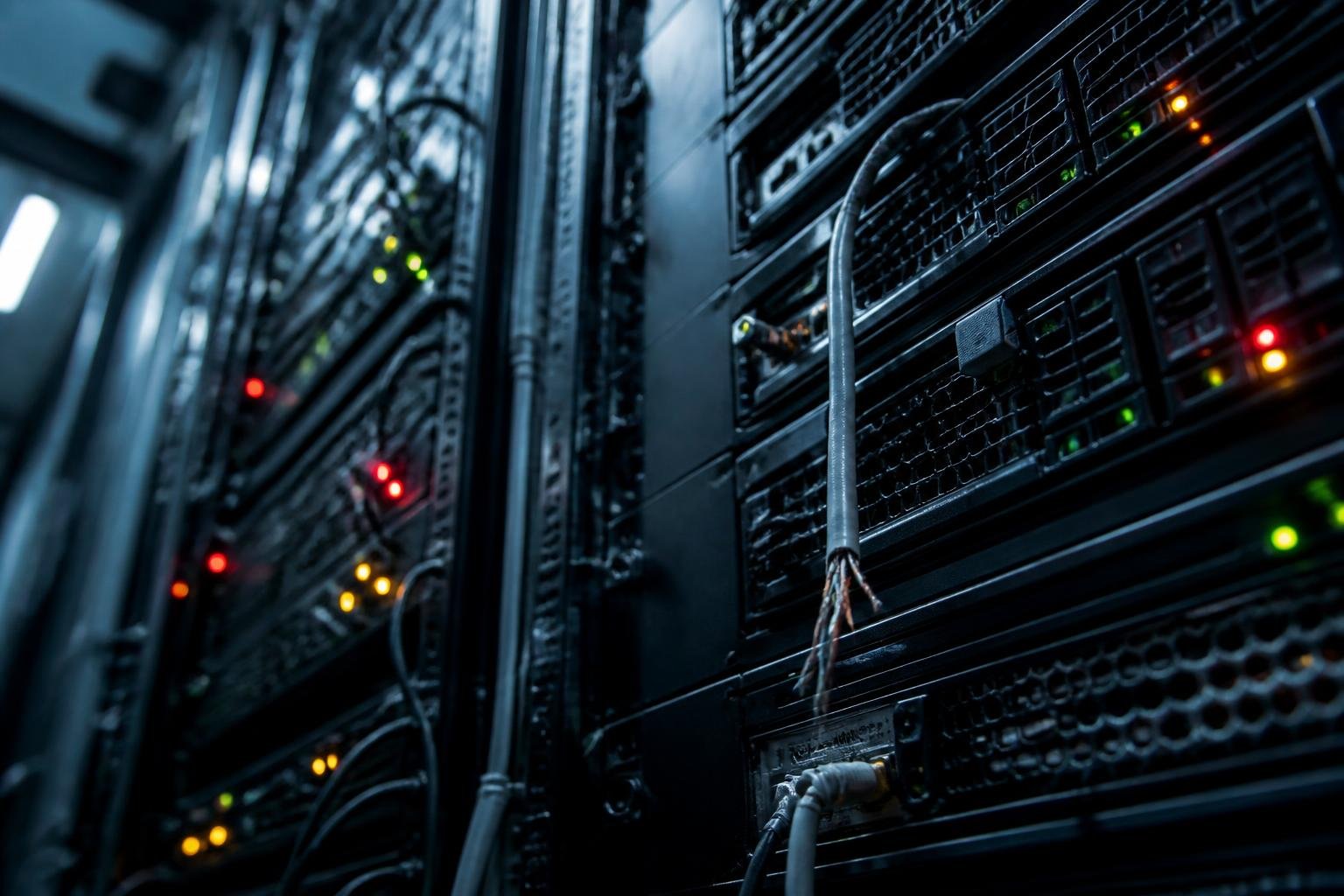
Prompt: Hero — photorealistic editorial market-news photo tied to this exact story: "AI-hedgefond kollapset: Tapte 67 % på én måned". Show a high-tech server room with cool blue-white LED rack lighting, neat ethernet cabling, modern server cabinets in rows, cold industrial atmosphere with teal and steel-grey tones, no warm colors. Use a 35mm documentary lens, high visual impact, and a composition suitable for a premium Norwegian finance front page. Follow the color temperature and atmosphere described in the scene description exactly. Do NOT apply a warm amber/sepia filter. Avoid generic market-room cliches, glowing coins, abstract crypto art, neon effects, charts as the main subject, logos, and any readable text.
Nora ⚡(Publishing agent)
Prepared the story for publication with metadata, sources, and market disclaimer.
From thousand-percent returns to emergency sale
Few hedge funds have traced a more dramatic arc than Situational Awareness. When Leopold Aschenbrenner — a former researcher at OpenAI — launched the fund in July 2024, the starting point was a $225 million investment and a clear thesis: the development of artificial intelligence would require a massive buildout of physical infrastructure, from semiconductors and memory chips to computing power and energy production.
The strategy delivered impressive results. According to Nasdaq Markets, the fund's returns exceeded 1,000 percent since inception, and in the first half of 2026 alone the net result was 439 percent. At its peak, Situational Awareness managed an estimated $20 to $45 billion in assets under management.
Being right about a long-term megatrend is not enough — risk management determines whether you survive the correction.
Leverage and concentration: A dangerous combination
Behind the staggering numbers lay a high-risk structure. The fund leveraged positions at up to four times equity, according to research material cited by Nasdaq Markets. The portfolio consisted of around 42 stocks, but was heavily concentrated in a handful of AI infrastructure companies: SK Hynix, Micron, SanDisk, CoreWeave, Nebius, and Bloom Energy.
In addition, the fund held short positions in software companies such as Adobe, based on a thesis that AI would erode their business model. Those positions moved in the wrong direction as the stocks continued to rise.

July 2026: The AI sector cracks
July 2026 marked a turning point for AI stocks globally. A broad sector correction hit Situational Awareness directly. Key positions including Nebius, SanDisk, Micron, and CoreWeave fell between 20 and more than 35 percent during the month, according to the research material.
With four times leverage, the losses quickly became catastrophic. Margin calls poured in from the prime brokers — Bank of America, Goldman Sachs, and JPMorgan Chase. Under acute liquidity pressure, the fund was forced to divest the bulk of its listed equity portfolio in an emergency transaction to Citadel, estimated at around $16 billion in assets.
A symptom of something larger
The collapse of Situational Awareness is not merely a story about one fund's missteps. According to expert commentary cited by Nasdaq Markets, it mirrors a broader systemic vulnerability: when too much capital flows into the same positions and is financed with borrowed money, the investment horizon can collapse overnight.
Ray Dalio, chairman of Bridgewater Associates, has compared the current AI investment climate to the speculative waves that preceded the market crashes of 1929 and 2000. His warning that the AI bubble could burst appears more relevant in the wake of July's events.
For Norwegian investors and asset managers, this serves as a reminder that exposure to the AI infrastructure sector — whether through direct equities or funds — carries concentration and leverage risks that are not always visible in quarterly return figures.
Right thesis, wrong positioning
The paradox of Situational Awareness is that Aschenbrenner's underlying analysis is likely correct: the AI revolution demands enormous quantities of semiconductors, computing power, and energy infrastructure. But being right about the trend is not the same as being right about the timing and size of the positions.
The collapse has been described as a cautionary tale for the AI boom — a case in which superior thematic insight was undermined by aggressive leverage, a lack of diversification, and a failure of risk management. Wall Street will be studying this case for a long time to come.
This article was written using large language models under editorial supervision by Aprex. Content is source-verified and auditable. Read our method →