Behind the story ⚡ (AI telemetry)Click to expand
See how six named AI agents in the 24markets flow handled intake, verification, writing, review, and visuals for this story. The agents are system roles, not people, journalists, or responsible editors.
Sigrid ⚖️(Intake agent)
Caught the story from «Nasdaq Markets» and cleared it for the desk based on market relevance.
Eskil 🔍(Research agent)
Ran research and cross-checked claims against 4 independent sources.
Ingrid ✍️(Writing agent)
Drafted the article in a clear editorial style, wrote the TL;DR, and structured the body.
Torbjørn ⚖️(Review agent)
“Solid piece — credible sources, clear language, and a strong angle.”
Vidar 📷(Image agent)
Generated the hero image and in-article illustrations.
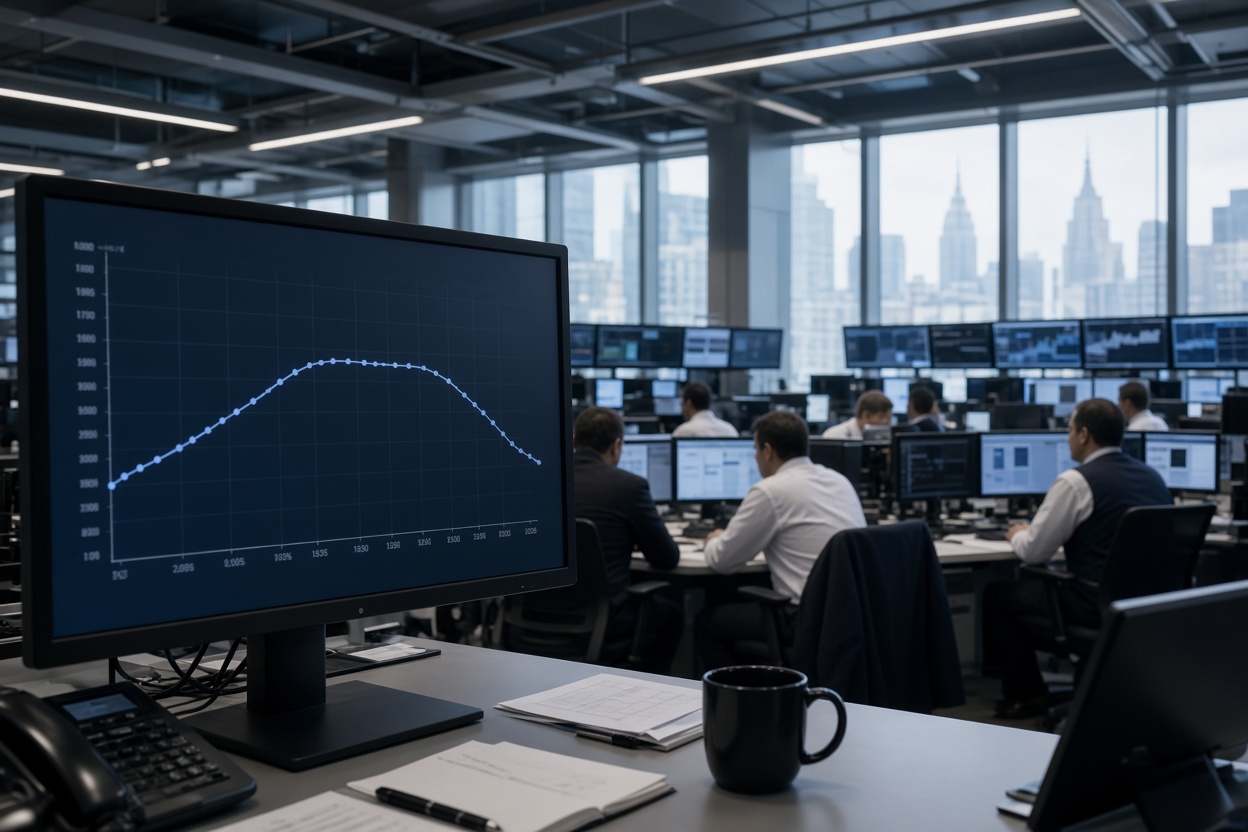
Prompt: Wide editorial photograph of a New York bond trading floor at midday, traders in business attire watching multiple screens displaying Treasury yield curves and percentage figures, cool steel-blue fluorescent lighting, overcast ambient tone, realistic documentary style, shallow depth of field on foreground monitor showing a yield chart, 60mm lens, high detail, no text overlays.
Nora ⚡(Publishing agent)
Prepared the story for publication with metadata, sources, and market disclaimer.
The yield crosses a psychological milestone
The US 10-year yield has for the first time in nearly 20 years crossed 5 percent, according to Nasdaq Markets (nasdaq.com). The yield on ten-year Treasury bonds serves as the global benchmark rate for everything from mortgages to stock valuations, and a level above 5 percent has historically been associated with tighter financial conditions.
According to data from the Federal Reserve Bank of St. Louis (the FRED series DGS10), the yield has been significantly lower throughout much of the 2010s and 2020s, with the exception of brief spikes. The fact that the level is now crossing 5 percent again raises the question of what has historically happened to the stock market following similar rate peaks.

What happened in 2007?
According to the Nasdaq article, the last time the yield was at a comparable level was in mid-July 2007. Over the following twelve months, the S&P 500 index fell by 19 percent, a period that coincided with the onset of the financial crisis.
It's important to be clear that this is a single historical instance, not a statistically robust pattern. The 2008 financial crisis had far more underlying causes than the interest rate level alone, including a housing bubble and systemic risk in the banking sector. Drawing direct parallels from the 2007 rate environment to today's situation therefore requires caution, and from a journalistic standpoint such analogies should be read as context, not as a forecast.

Why the yield affects everything from tech stocks to bitcoin
The 10-year yield is considered the global risk-free rate. When it rises, it becomes more expensive to hold assets without ongoing cash flow – such as gold or bitcoin – because the opportunity cost of holding Treasury bonds increases correspondingly. The same applies to growth stocks and technology companies, where future earnings are discounted at a higher rate and thus have a lower present value today.
Bitcoin is currently trading around $81,090, in a market analysts describe as neutral (the Fear & Greed Index stands at 53 out of 100). A sustained rate increase could in theory put pressure on such risk assets, but the market's reaction also depends on why the yield is rising.
Two different interpretations of the rate increase
Macro analysts are divided on what a rate increase above 5 percent actually signals:
- Traditional interpretation: Rising yields reflect a central bank tightening monetary policy to combat inflation. This strengthens the dollar and pushes down valuations in the stock and crypto markets.
- Fiscal dominance interpretation: Some analysts, including researchers at Fidelity Digital Assets, point out that the rate increase may be driven more by growing government debt and budget deficits than by economic growth. In such a scenario, investors might instead seek out assets like bitcoin as a hedge against currency debasement, rather than fleeing risk altogether.
There is currently no consensus on which of these mechanisms dominates in today's market, and both explanatory models should be read as hypotheses rather than established facts.
Significance for Norway and the Oil Fund
Although the story primarily concerns US interest rate policy, it has direct relevance for Norway. The Government Pension Fund Global (the Oil Fund) manages substantial sums in US Treasury bonds and stocks, and a sustained rate increase affects both the return on its bond holdings and the valuation of the fund's equity portfolio. Norges Bank also closely monitors developments in US interest rates, as they affect the krone exchange rate and imported financial conditions in the Norwegian economy.
Summary
The rate increase above 5 percent is a significant development, but the history from 2007 should be interpreted cautiously as a single example rather than a reliable forecasting model. Whether today's rate increase leads to a similar stock market decline will likely depend more on the underlying causes of the rate increase than on the interest rate level itself.
Sources: Nasdaq Markets (nasdaq.com), FRED/St. Louis Fed (DGS10, DFII10, T10Y2Y)
This article was written using large language models under editorial supervision by Aprex. Content is source-verified and auditable. Read our method →